

 English
 عربى
عربى
Content
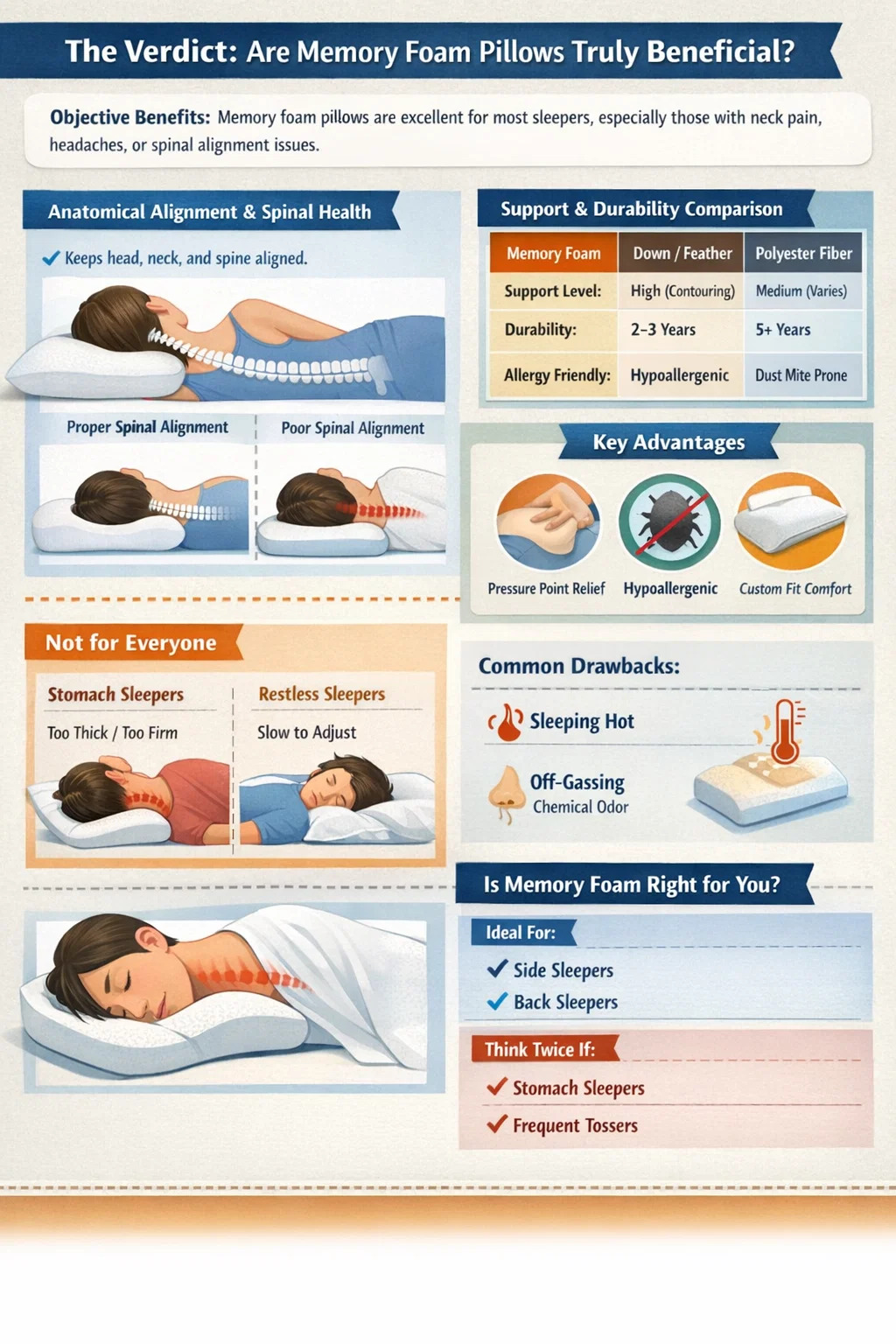
The Verdict: Are Memory Foam Pillows Truly Beneficial?
Yes, memory foam pillows are objectively good for the majority of sleepers, particularly those suffering from chronic neck pain, tension headaches, or spinal alignment issues. These pillows function by utilizing polyurethane treated with specific chemicals to increase density and viscosity, allowing the material to soften under body heat and contour precisely to your unique anatomy. This results in a "custom-fit" support system that traditional fiber or down pillows cannot replicate.
While they offer significant orthopedic advantages, they are not a universal panacea. Their "goodness" depends largely on your personal sleeping posture, heat tolerance, and sensitivity to material odors. For a side or back sleeper, a memory foam pillow can be a transformative tool for sleep hygiene, whereas a stomach sleeper might find them too restrictive or firm.
Anatomical Alignment and Spinal Health
The primary health argument for using memory foam pillows centers on spinal alignment. When you lie down, your head, neck, and shoulders should form a straight line with your spine. Standard pillows often collapse under the weight of the head (which weighs roughly 10 to 11 pounds), leaving the neck unsupported and strained.
How Contour Shapes Impact Recovery
Memory foam provides what is known as "pressure point relief." By distributing the weight of the head evenly across the surface, it reduces the load on the cervical vertebrae. For instance, individuals with cervical spondylosis often report a reduction in morning stiffness when switching to a contoured memory foam design.
- Side Sleepers: Benefit from a higher "loft" that fills the gap between the ear and the shoulder.
- Back Sleepers: Benefit from the cradle effect that prevents the head from tilting too far forward or backward.
Comparative Performance of Pillow Materials
To understand why memory foam pillows are favored by physical therapists, it helps to compare them against other common filling materials used in the bedding industry.
| Feature | Memory Foam | Down / Feather | Polyester Fiber |
|---|---|---|---|
| Support Level | High (Contouring) | Low (Collapsible) | Medium (Varies) |
| Durability | 2 - 3 Years | 5+ Years (if maintained) | 6 - 12 Months |
| Allergy Friendly | Excellent (Hypoallergenic) | Poor (Dust Mite Prone) | Moderate |
Hypoallergenic Qualities and Respiratory Health
One of the less-discussed benefits of memory foam pillows is their dense physical structure. Unlike feather or shredded fiber pillows, solid-core memory foam is highly resistant to dust mites, which are a primary trigger for nighttime allergies and asthma.
Dust mites thrive in the loose, airy spaces of traditional pillows where skin cells can accumulate. The dense cellular structure of memory foam provides a less hospitable environment for these microscopic pests. For individuals who wake up with a "stuffy nose" or itchy eyes, switching to this material can significantly improve respiratory comfort during the night.
Addressing the Drawbacks: Heat and Off-gassing
Despite the benefits, memory foam pillows do have characteristics that some find unpleasant. Because the material reacts to heat to mold itself, it also tends to trap that heat against your skin. Traditional foam can lead to a "sleeping hot" sensation, which disrupts the body's natural cooling cycle necessary for deep REM sleep.
Solutions for Modern Sleep Comfort
Manufacturers have addressed these issues by introducing open-cell technology or gel-infused memory foam. These variations increase airflow and help pull heat away from the head. Additionally, the "chemical smell" known as off-gassing is a common temporary drawback. This occurs when volatile organic compounds (VOCs) are released from the foam after unpacking. While generally considered harmless, it is advisable to let a new memory foam pillow air out for 24 to 48 hours before use.
Is Memory Foam Right for Your Sleeping Position?
The "goodness" of memory foam pillows is highly subjective based on how you sleep.
- Stomach Sleepers: Often struggle with memory foam because the material is usually too thick or firm, which can force the neck into an unnatural upward angle, leading to lower back pain.
- Restless Sleepers: Those who flip frequently may find the "slow-recovery" of the foam frustrating, as it takes a few seconds for the pillow to reshape itself to the new position.
In conclusion, memory foam pillows are an excellent health investment if you prioritize neck support and allergy reduction. They are particularly beneficial for those with sedentary desk jobs who experience "tech neck" or chronic upper body tension. By choosing a pillow that matches your specific sleep posture and climate needs, you can vastly improve your long-term spinal health and overall sleep quality.