

 English
 عربى
عربى
Content
Sometimes, if a memory foam pillow is too high, or you want to convert it into a backrest or travel pillow, you might need to use cutting tools. Because memory foam is a very tough and dense material, haphazardly cutting it can easily leave the edges uneven and bumpy.
Specific steps for cutting a memory foam pillow:
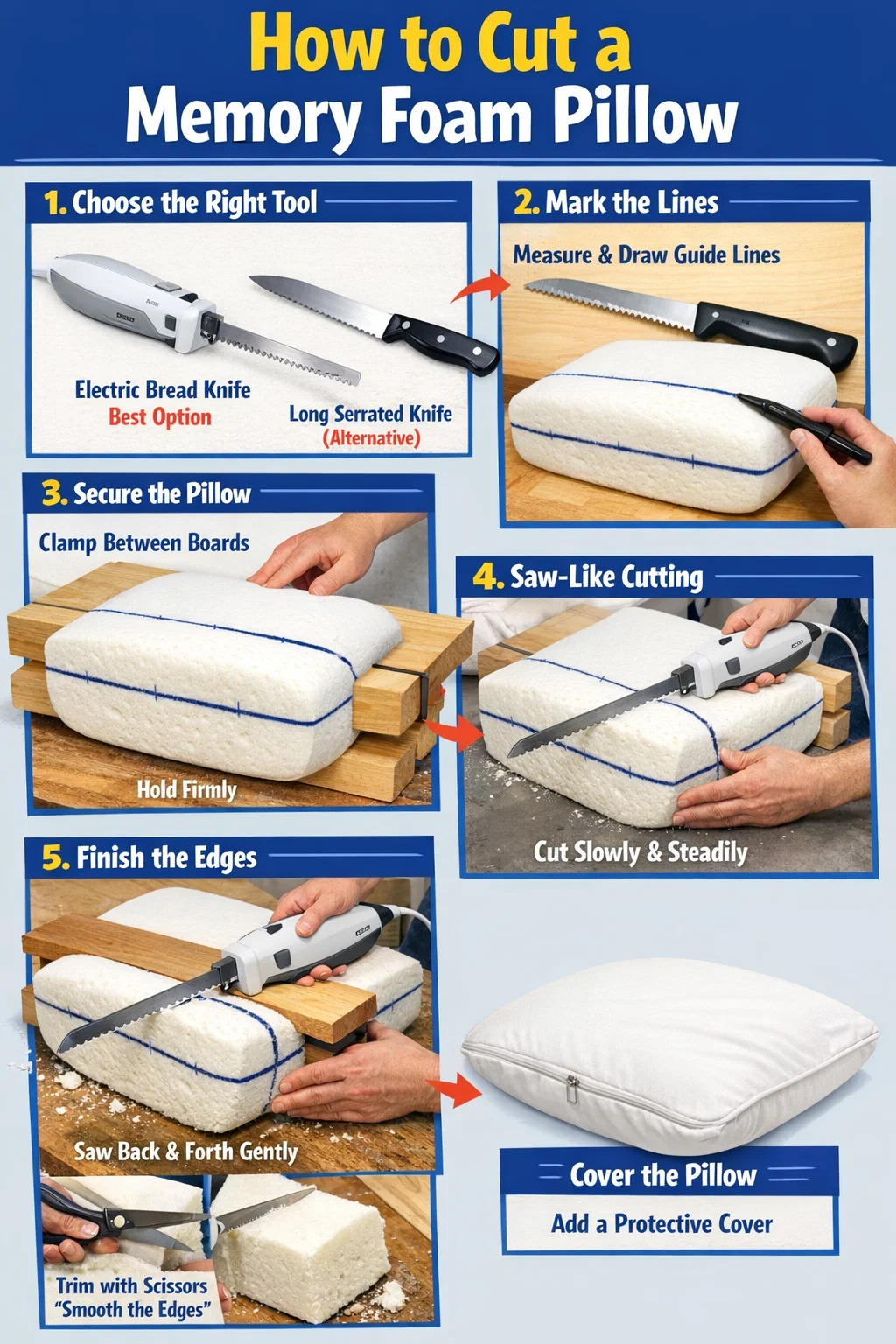
1. Choosing the right tool is half the battle.
Ordinary office scissors or paper cutters are difficult to use on thick memory foam; the cuts often look like they've been gnawed.
First choice: Electric bread knife. This is a lifesaver for memory foam; its serrated edges move quickly back and forth, allowing you to slice the pillow cleanly, like slicing toast.
Alternative: Long bread knife with fine serrations. If you don't have an electric one, you can use a long serrated knife from cutting baguettes, but you need to be steady with your hands.
Note: The knife must be long enough, ideally long enough to cut through the entire thickness of the memory foam pillow in one stroke.
2. Mark the lines to prevent misalignment.
The surface of memory foam is relatively soft, and it's easy to cut crookedly by hand.
Instructions: 1. First, use a ruler to measure the desired height or shape.
2. Marking: Using a thicker marker or tailor's chalk, draw clear cutting lines on the side and surface of the memory foam pillow. Ideally, draw a full circle around the pillow to ensure alignment during the cut.
3. Fixing Techniques (Don't Press Hard with Your Hands)
Many people press hard on the pillow while cutting, but this can deform the memory foam.
Problem: When you release your hand, you'll find that what you thought was a straight cut has become curved.
Correct Method: Gently hold the pillow, or use two pieces of wood to clamp the marked line, leaving only the part to be cut exposed. This ensures the memory foam pillow is cut naturally.
4. Saw-like Cutting Action
Key Points: Like sawing, pull the blade back and forth quickly and lightly, avoiding downward pressure.
Slow and steady wins the race: Especially when you're almost at the bottom, slow down to prevent tearing the edges with the final cut.
5. Final Edge Finishing
Smoothing: After cutting, if the edges are still a little uneven, use regular large scissors to trim the rough edges in small areas.
Add a Cover: Because the inside of the cut memory foam pillow no longer has its original protective coating, it's highly recommended to put it in a tight-fitting inner cover to prevent foam fragments from falling out.