

 English
 عربى
عربى
Content
The Quick Answer: How to Pick the Perfect Memory Foam Pillow
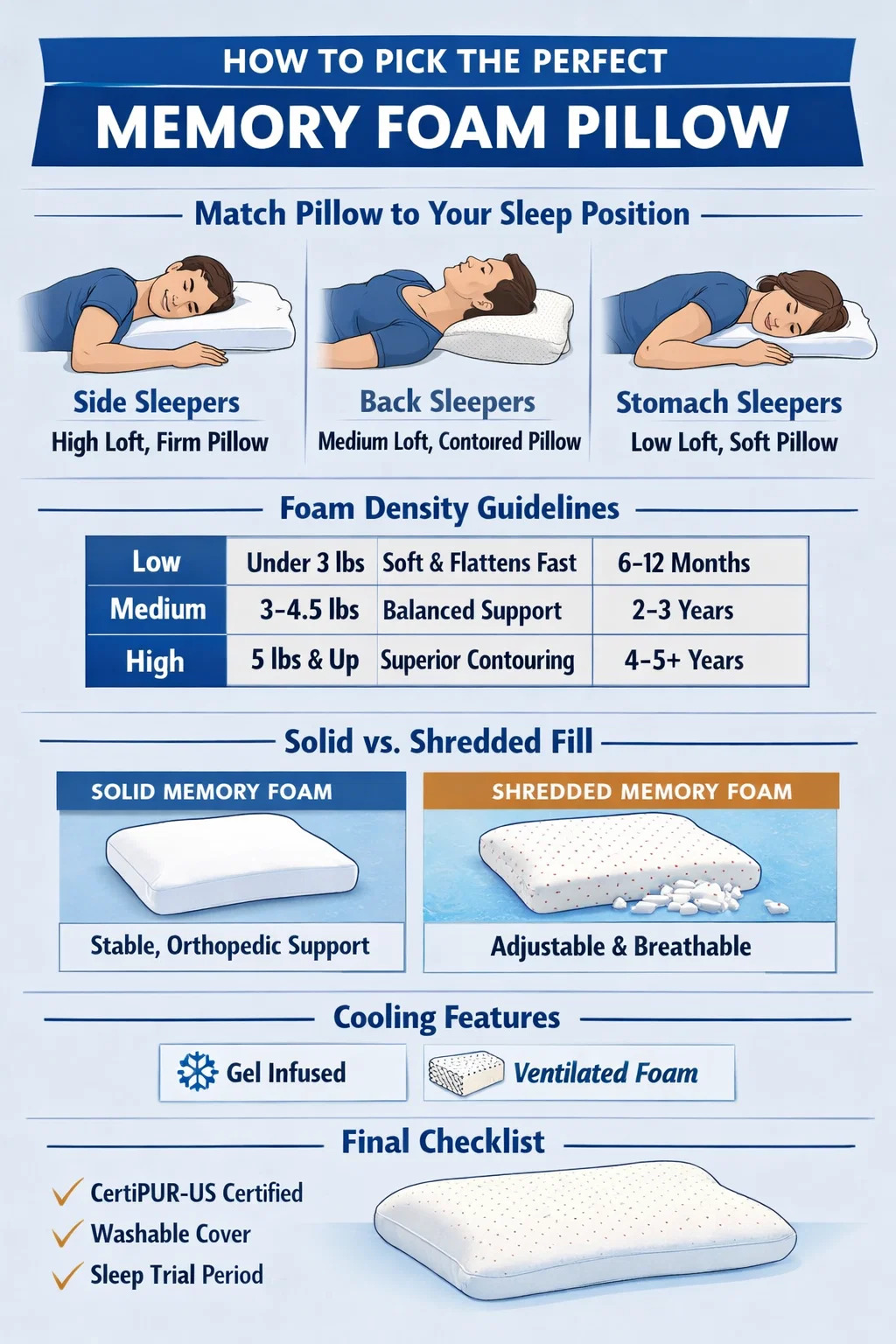
To pick the right memory foam pillow, you must match the pillow's "loft" (height) and "firmness" to your primary sleeping position. Side sleepers should choose a high-loft, firm pillow to fill the shoulder gap; back sleepers need a medium-loft pillow with a neck contour; and stomach sleepers require a very thin, soft foam or shredded fill. Beyond position, always check the foam density (aim for 3.5 lbs/ft³ or higher) to ensure long-term durability and support.
Evaluate Your Primary Sleeping Position
Your sleep posture is the most significant factor in determining which memory foam pillow will prevent neck strain. The goal is "neutral spinal alignment," where your ears, shoulders, and hips are aligned without the neck tilting.
Side Sleepers: The Shoulder Gap Challenge
If you sleep on your side, you have a large space between your neck and the mattress. A memory foam pillow for side sleepers should be thick enough (usually 5 to 6 inches) to keep your head from dipping toward the bed. A firm, solid block of foam typically works best here to prevent the material from bottoming out during the night.
Back Sleepers: Cradling the Natural Curve
Back sleepers need a pillow that supports the cervical curve of the neck while letting the head sink slightly. A contoured memory foam pillow—which looks like a wave with a lower center and higher edges—is specifically engineered for this. A loft of 3 to 4 inches is usually sufficient for most back sleepers.
Understand Foam Density and Quality
The longevity and "feel" of your memory foam pillow are dictated by its density. This is measured in pounds per cubic foot (lbs/ft³). High-density foam feels more substantial and provides better "slow-spring-back" memory.
| Density Rating | Support Level | Lifespan Expectancy |
|---|---|---|
| Low (under 3 lbs) | Soft, flattens quickly | 6 - 12 months |
| Medium (3 to 4.5 lbs) | Balanced support | 2 - 3 years |
| High (5 lbs and up) | Superior contouring | 4 - 5+ years |
Solid vs. Shredded: Which Structure to Choose?
When you learn how to pick a memory foam pillow, you will notice two distinct internal styles. Your choice depends on whether you like a "fixed" or "moldable" feel.
- Solid Memory Foam: Best for orthopedic use. It provides a consistent surface and won't shift during the night. It is ideal for people with chronic neck pain who need reliable support.
- Shredded Memory Foam: Filled with torn pieces of foam. It is breathable and customizable. You can unzip the cover and take out stuffing to lower the height. This is perfect for people who frequently switch positions or aren't sure which loft they need.
Temperature Regulation Features
Traditional foam acts as an insulator, which can make you feel hot. If you are a "hot sleeper," picking a memory foam pillow with cooling technology is mandatory for comfort.
Look for "open-cell" foam, which has larger internal pores to allow air to circulate. Alternatively, many high-end memory foam pillows feature a layer of phase-change material (PCM) or gel infusion on the surface. These technologies don't stay cold forever, but they help dissipate initial body heat to help you fall asleep faster.
Final Checklist for Your Purchase
Before finalizing your choice, run through these practical considerations to ensure the memory foam pillow is high-quality:
- CertiPUR-US Certification: Ensures the foam is free of heavy metals and has low VOC emissions.
- Washable Cover: Since the foam itself cannot be washed, a high-quality, removable bamboo or cotton cover is essential for hygiene.
- Trial Period: Memory foam has a "break-in" period of about 10 to 14 days. Pick a brand that offers a sleep trial.
By carefully matching the density to your budget and the loft to your shoulder width, you can transform your sleep quality. A well-picked memory foam pillow can last several years and significantly reduce morning neck stiffness.