

 English
 عربى
عربى
Content
- 1 Why Elevation Actually Works for Acid Reflux
- 2 How to Stack Pillows for Acid Reflux: Step-by-Step
- 3 The Right Elevation Angle: What the Research Shows
- 4 Memory Foam Pillow vs. Regular Pillows for Acid Reflux
- 5 Sleeping Positions That Work — and the Ones That Make It Worse
- 6 Common Pillow Stacking Mistakes That Reduce Effectiveness
- 7 Wedge Pillows vs. Stacked Standard Pillows: Which Is Better?
- 8 Additional Adjustments That Amplify Pillow Elevation Results
- 9 Frequently Asked Questions
- 9.1 How many pillows should I use for acid reflux?
- 9.2 Will a memory foam pillow help with acid reflux?
- 9.3 Can I use a regular pillow under a wedge pillow?
- 9.4 Does sleeping on the left side really reduce acid reflux?
- 9.5 How long before I notice improvement from pillow elevation?
- 9.6 Is it safe to sleep elevated every night long-term?
If you deal with acid reflux at night, the most effective immediate fix is to elevate your upper body between 6 and 8 inches while you sleep. The right way to stack pillows — or better yet, use a purpose-built wedge or Memory Foam Pillow — can dramatically reduce the frequency and intensity of nighttime reflux episodes. This guide covers exactly how to do it, what works, what doesn't, and why the angle you sleep at matters more than most people realize.
Why Elevation Actually Works for Acid Reflux
Acid reflux — clinically called gastroesophageal reflux disease (GERD) when chronic — happens when stomach acid travels backward up through the lower esophageal sphincter (LES) into the esophagus. At night, this becomes especially problematic because lying flat removes gravity from the equation.
When you're upright, gravity keeps stomach contents where they belong. The moment you lie flat, that advantage disappears entirely. Studies show that roughly 79% of people with GERD experience nighttime symptoms, and those who do have significantly worse overall reflux severity compared to daytime-only sufferers.
Elevation recreates a partial gravitational advantage. By keeping the esophagus angled above the stomach, acid must travel uphill to cause reflux — which substantially reduces how often it happens and how far it travels when it does.
How to Stack Pillows for Acid Reflux: Step-by-Step
The method matters as much as the equipment. Done correctly, stacked pillows can provide meaningful relief. Done poorly, they shift around during sleep, provide inadequate elevation, or create neck and shoulder pain that compounds your problems.
Start with a Firm Base Pillow
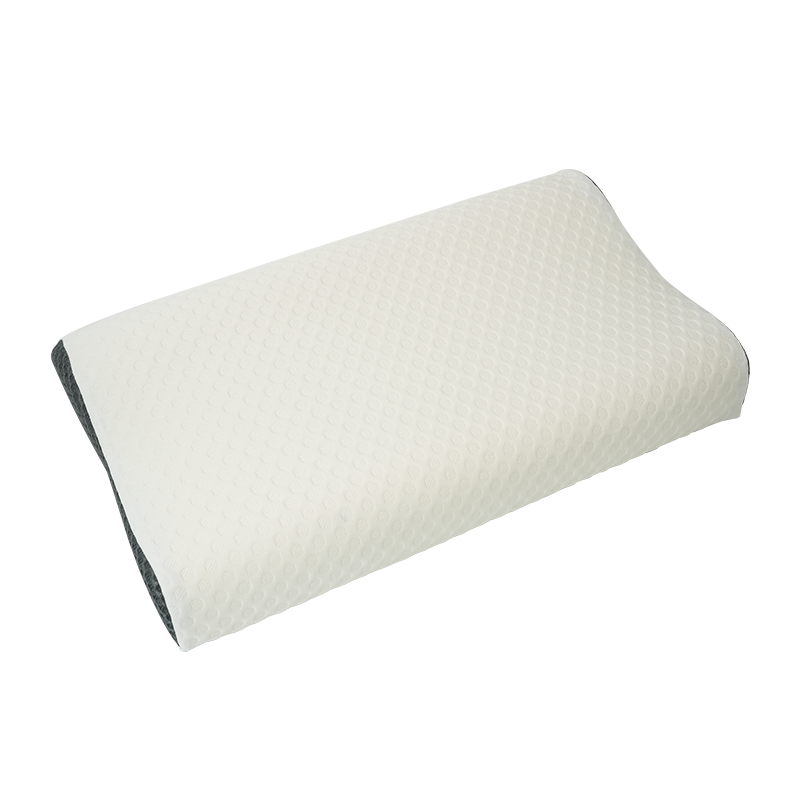
Place a firm, dense pillow flat on your mattress as the foundation. A Memory Foam Pillow works exceptionally well here because memory foam doesn't compress as easily under weight as down or polyester fill. The base pillow should not shift or flatten significantly when you lie on it.
Add a Second Pillow at a Slight Angle
Position a second pillow on top of the first, angled slightly so that it creates a ramp rather than a straight vertical stack. A pure vertical stack forces your neck into an uncomfortable flexed position and puts strain on your cervical spine. The goal is a gradual incline from hips to head.
Keep Your Back and Shoulders Supported
The elevation must extend under your upper back — not just your head. If only your head is raised, your stomach may actually sit higher than your esophagus in some sleeping positions, which makes reflux worse. Tuck the base of your pillow stack underneath your shoulder blades.
Add a Third Pillow Only If Needed
If two pillows don't reach the 6–8 inch threshold, add a third. Use a softer, thinner pillow on top so your neck sits in a neutral position. At this point, three pillows typically provide 7–9 inches of elevation when stacked with proper ramp-style angulation.
Check Your Sleeping Position
After lying down, confirm your upper body is on a consistent incline. If you're on your side, left-side sleeping is preferred — research shows it positions the stomach lower relative to the esophageal junction, offering additional protection against nighttime reflux compared to right-side sleeping.
Secure the Stack
Pillows notoriously shift during sleep. Use a large pillowcase that covers the entire stack, or use a body pillow alongside you to act as a guardrail. Some people find that placing a thin non-slip mat between pillows helps maintain the configuration through the night.
The Right Elevation Angle: What the Research Shows
Not all angles provide equal protection. Clinical research has narrowed down the effective range for upper body elevation in GERD management, and the numbers are specific enough to matter.
| Elevation Height | Approximate Angle | Reflux Reduction | Comfort Level |
|---|---|---|---|
| 2–3 inches | ~10° | Minimal | High |
| 4–5 inches | ~15° | Moderate | Moderate–High |
| 6–8 inches | ~20–30° | Significant | Moderate |
| 10+ inches | >35° | High — but diminishing returns | Low (strain on neck/back) |
The sweet spot is 20 to 30 degrees. Below that, you won't get meaningful acid suppression. Above 35 degrees, most people can't sleep comfortably enough to stay in position all night, which defeats the purpose. A proper acid reflux pillow — including contoured memory foam pillow wedge designs — is typically engineered to sit in this precise range.
Memory Foam Pillow vs. Regular Pillows for Acid Reflux
The material of your pillow matters more for reflux management than most people expect. Here's a direct comparison of the most common options.
Memory Foam Pillow
- Holds its shape through the night without collapsing under body weight
- Consistent elevation — you don't sink 2 inches into it by 3 a.m.
- Conforms to the natural curve of the neck, reducing cervical strain
- Wedge-shaped memory foam pillow designs are purpose-built for reflux angles
- Durable — retains density for 2–3 years of regular use before significant compression
Best for: People with chronic GERD, those who move frequently in sleep, side sleepers who need consistent lateral support.
Down or Down-Alternative Pillows
- Soft and comfortable but compress significantly under head weight
- Elevation height drops by 1–2 inches after an hour of lying on them
- Stacked down pillows shift apart easily during sleep
- Work better as a top comfort layer than a base elevation layer
Best for: Use as the top pillow in a multi-pillow stack, layered over a firmer base.
Standard Polyester Pillows
- Inexpensive but compress quickly and unevenly
- Fill clumps over time, creating uneven elevation across the pillow surface
- May need frequent fluffing and replacement
- Less effective for maintaining a consistent angle through the night
Best for: Temporary use or supplementary positioning only.
Sleeping Positions That Work — and the Ones That Make It Worse
Your sleeping position interacts directly with your pillow stack. Getting the elevation right but sleeping in the wrong position can reduce or even eliminate the benefit.
Left-Side Sleeping (Best)
Studies consistently show that sleeping on the left side significantly reduces acid reflux episodes compared to the right side. The anatomy is the reason: on the left side, the stomach sits below the esophageal junction due to the curvature of the gastroesophageal tract. Acid pools in the lower part of the stomach and has farther to travel to reach the esophagus.
Back Sleeping with Elevation (Good)
Sleeping on your back with proper upper body elevation is effective for GERD, provided the incline extends down to your mid-back. A wedge Memory Foam Pillow is particularly suited to this position because it supports the full upper body in a stable ramp configuration. Back sleepers who roll their knees up onto a small pillow reduce lumbar strain from this position.
Right-Side Sleeping (Avoid)
On the right side, the LES sits below the level of the stomach's acid pool. This means even small amounts of acid near the junction can flow into the esophagus with minimal effort. Multiple controlled studies have found that right-side sleeping increases both the frequency and duration of nighttime acid exposure compared to left-side sleeping, regardless of head elevation.
Flat Back or Stomach Sleeping (Worst)
Sleeping completely flat neutralizes the benefit of any pillow elevation because the torso isn't elevated — only the head is. Stomach sleeping puts direct pressure on the abdomen, which can force acid upward through the LES. These positions are associated with the highest rates of nighttime acid exposure and should be avoided by reflux sufferers whenever possible.
Common Pillow Stacking Mistakes That Reduce Effectiveness
Even people who understand the principle of elevation often make configuration errors that limit how well their setup actually works. These are the most frequent ones.
Elevating Only the Head
This is the single most common error. Placing pillows only under the head causes the neck to flex forward while the torso remains flat. This position doesn't recreate the necessary gravitational angle — it just creates neck pain. Elevation must begin at least at the shoulder blades to work correctly.
Using Pillows That Are Too Soft
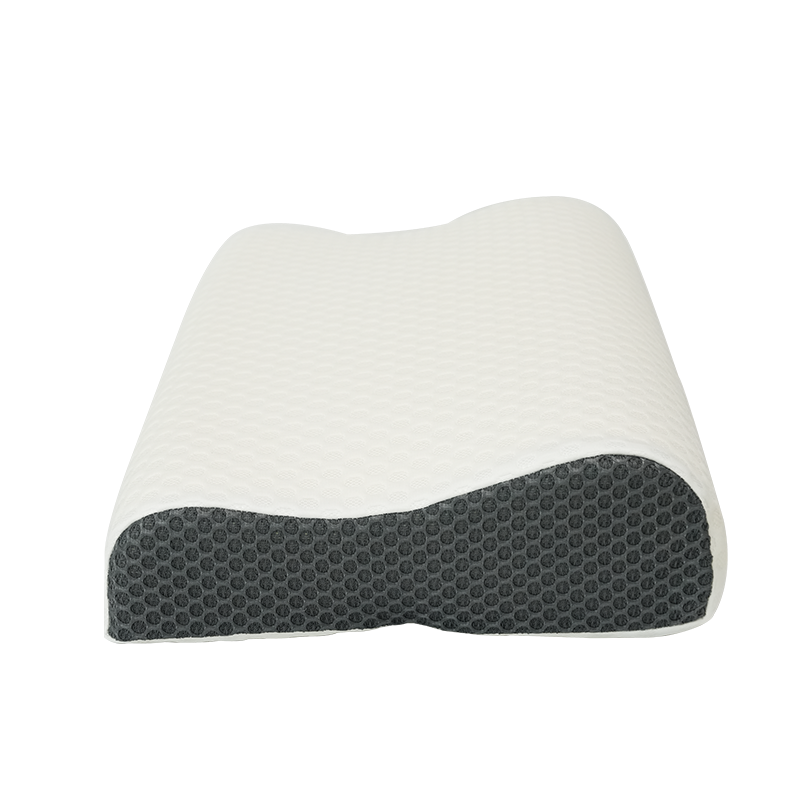
A thick pillow that compresses from 6 inches to 3 inches under your body weight provides none of the elevation you planned on. Soft down or worn-out polyester pillows are particularly prone to this. The memory foam pillow category — especially high-density options — solves this problem by maintaining consistent height and firmness under sustained pressure.
Stacking Pillows Vertically Instead of in a Ramp
Two pillows placed directly on top of each other create a step, not a slope. The sharp angle at the back of the stack means your lower back and mid-spine are unsupported, which causes you to slide down or shift position during sleep — undoing the elevation entirely by morning. Angle the back edge lower than the front to create a true incline.
Not Accounting for Mattress Sinkage
If your mattress has significant sinkage in the middle — common with older spring mattresses or soft foam — your hips can drop lower than your torso even with pillow elevation. This creates a hammock effect that puts upward pressure on your stomach. If this applies to your setup, a firm mattress topper under the upper half of the bed can help counteract it.
Eating Too Close to Bedtime
Pillow elevation helps but it doesn't override timing. Eating within 2–3 hours of lying down means your stomach still has substantial food and acid production when you go horizontal. Even the best-configured pillow stack can't fully compensate for a full stomach. Finish eating at least 2.5 to 3 hours before sleep for the setup to work at its full potential.
Wedge Pillows vs. Stacked Standard Pillows: Which Is Better?
If you're using multiple pillows right now, you might be wondering whether a purpose-built wedge pillow is worth switching to. Here's the honest comparison.
Stacked Standard Pillows
- Lower upfront cost if you already own multiple pillows
- More flexible — can adjust height easily by adding or removing a pillow
- Pillows shift during sleep, especially with movement
- Difficult to get a consistent, true ramp angle without special configurations
- Regular pillows compress — actual elevation decreases through the night
Wedge Memory Foam Pillow
- Single solid piece — doesn't shift, separate, or collapse during sleep
- Precision-engineered angle, typically between 30° and 45°
- High-density memory foam maintains elevation all night consistently
- Supports full upper body from hips to head in a true incline
- Higher initial cost but outperforms stacked pillows in clinical studies on GERD
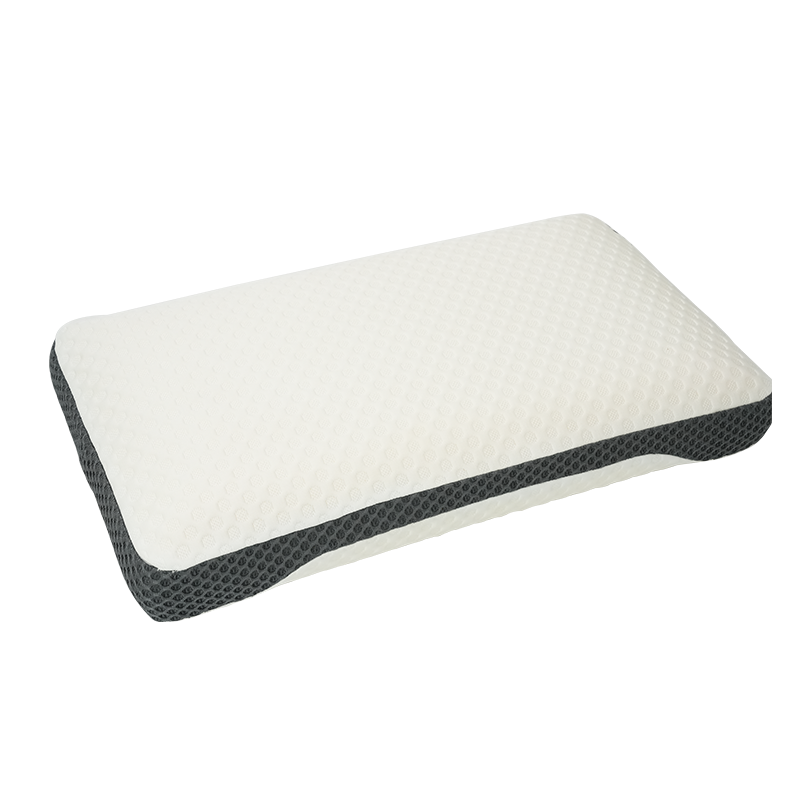
The verdict: a wedge Memory Foam Pillow outperforms stacked standard pillows for consistent acid reflux relief, primarily because it maintains its shape and angle throughout the night without any shift or compression. Stacked pillows can work well, but require more careful setup and tend to lose elevation as the night progresses.
Additional Adjustments That Amplify Pillow Elevation Results
Pillow configuration is the foundation, but these supporting adjustments compound the benefit significantly. Most people with moderate to severe GERD find they need a combination of approaches rather than any single fix.
Loosen Nightwear Around the Waist
Tight waistbands or sleepwear that compresses the abdomen increases intragastric pressure, which pushes acid toward the LES even when you're elevated. Loose-fitting pajamas or sleep shorts remove this mechanical pressure entirely.
Raise the Bed Head with Risers
Bed risers placed under the headboard legs can elevate the entire head of your mattress by 4–6 inches. This approach supports the whole body on an incline — more comfortable than pillow stacking for many people — and can be used in combination with a memory foam pillow for additional head and neck support.
Avoid Trigger Foods Within 3 Hours of Sleep
Common nighttime GERD triggers include alcohol, fatty meals, chocolate, mint, citrus, tomatoes, and carbonated drinks. Each of these either relaxes the LES or increases stomach acid production. Pillow elevation helps, but consuming triggers immediately before sleep raises acid levels beyond what elevation can manage.
Keep a Consistent Sleep Schedule
Irregular sleep patterns disrupt the natural motility of the digestive system. Consistent sleep and wake times — even on weekends — help regulate gastric emptying, so there's less acid volume present when you lie down. This is a long-term support strategy rather than an overnight fix, but it consistently shows up as a contributing factor in reflux management.
Chew Gum After Dinner
This one surprises people: chewing gum for 20–30 minutes after eating increases saliva production by up to 140%. Saliva is alkaline and acts as a natural buffer for acid in the esophagus. The swallowing action also helps clear residual acid from the esophageal lining. Use a non-mint variety, as mint can relax the LES.
Maintain a Healthy Weight
Excess abdominal weight increases intra-abdominal pressure, which chronically weakens the LES over time. Studies show that losing 10% of body weight can significantly reduce GERD symptoms in overweight individuals — in some cases producing more improvement than medication alone. Pillow positioning is more effective when background pressure on the LES is lower.
Frequently Asked Questions
How many pillows should I use for acid reflux?
Most people need two to three pillows to reach the effective 6–8 inch elevation range. Start with two firm pillows — ideally with a memory foam pillow as the base — and check whether you've reached sufficient height before adding a third. The key is the total elevation, not the pillow count itself.
Will a memory foam pillow help with acid reflux?
A Memory Foam Pillow is one of the best choices for acid reflux elevation because it resists compression under body weight, maintaining consistent height through the night. Wedge-shaped memory foam pillow designs are specifically engineered for this purpose, providing a stable incline that doesn't flatten or shift as you sleep.
Can I use a regular pillow under a wedge pillow?
Yes — placing a regular pillow on top of a wedge pillow is common and generally fine. It adds a layer of softness for neck comfort without significantly reducing the structural elevation provided by the wedge. Use a thin, soft pillow on top rather than a thick one that would disrupt the angle.
Does sleeping on the left side really reduce acid reflux?
Yes, and the effect is well-documented. Multiple studies comparing left-side and right-side sleeping in GERD patients have found significantly less acid exposure on the left side. The anatomical position of the stomach and esophageal junction means that left-side sleeping naturally reduces the risk of acid reaching the esophagus, even without pillow elevation.
How long before I notice improvement from pillow elevation?
Many people report noticeable improvement within the first few nights of proper elevation — particularly in reducing the sensation of waking with acid in the throat or mouth. More complete symptom management typically develops over 1–2 weeks as the setup becomes consistent and other lifestyle factors are adjusted alongside it.
Is it safe to sleep elevated every night long-term?
Sleeping with upper body elevation is widely recommended and considered safe for long-term use. There is no evidence that consistent elevation causes harm when done correctly. The main adjustment period involves getting used to the position, as some people initially experience minor shoulder or hip discomfort that usually resolves within a week or two.