

 English
 عربى
عربى
Content
- 1 What Is a 5-Zone Memory Foam Mattress?
- 2 How a 5-Zone Mattress Differs From a Standard Memory Foam Mattress
- 3 Key Benefits of a 5-Zone Memory Foam Mattress
- 4 Density and Firmness: What to Look For in a 5-Zone Construction
- 5 Who Should Consider a 5-Zone Memory Foam Mattress Topper?
- 6 Practical Buying Checklist for a 5-Zone Memory Foam Mattress
- 7 How to Care for a 5-Zone Memory Foam Mattress
- 8 Frequently Asked Questions About 5-Zone Memory Foam Mattresses
- 8.1 What does the five-zone layout mean on a memory foam mattress?
- 8.2 Is a 5-zone topper as good as a full 5-zone mattress?
- 8.3 What thickness should I choose for a 5-zone topper?
- 8.4 Will a 5-zone memory foam mattress sleep hot?
- 8.5 Can I use a 5-zone memory foam topper on an adjustable bed?
- 8.6 How long does a 5-zone memory foam mattress last?
You settle into bed after a long day expecting a restful night, yet morning arrives with a numb hip, a stiff shoulder, or a dull ache in the lower back. If that pattern sounds familiar, the fault often lies not in how many hours you sleep, but in how the sleeping surface distributes your body weight. A uniform slab of foam presses as firmly against your lightweight calves as it does against your heavy hips, and that mismatch is exactly what creates sore spots.
A 5-zone memory foam mattress solves that mismatch. It divides the sleeping surface into five calibrated support zones - head and neck, shoulders, lumbar spine, pelvis, and legs - and each zone uses a different foam density, contour shape, or ventilation pattern to suit the body part resting on it. In practice, the pelvis gets a firmer base to prevent deep sinking, the lower back gets steady support for its natural inward curve, and the shoulders and legs get a softer response to lower joint pressure.
This guide explains what the five zones do, how such a mattress compares with a standard memory foam bed, which density and firmness suit your sleeping position, and what to check before buying. It is written for individual sleepers reviewing their next mattress as well as for commercial buyers who specify zoned toppers for hotel rooms, dormitories, and e-commerce product lines.
What Is a 5-Zone Memory Foam Mattress?
A 5-zone memory foam mattress is a mattress or mattress topper whose sleeping surface is separated into five horizontal support zones, each with its own pressure and support characteristics. The zoning is not printed on the cover; it is built into the foam. Manufacturers achieve it in several ways: by varying the core density from section to section, by cutting transverse grooves or channels into the comfort layer, by carving height differences into the top surface, or by using different perforation patterns that change how the foam compresses at that point.
The design goal is straightforward. The body is not uniform along its length; the pelvis is heavy, the shoulders are wide, and the legs are comparatively light. A firm surface under the pelvis keeps the heaviest segment from dropping, while a softer cradle under the shoulders lets the joint sink just enough to keep the spine horizontal. A typical five-zone layout looks like this:
| Zone | Body Area | Relative Firmness | Main Purpose |
|---|---|---|---|
| 1 | Head and neck | Soft, gentle contouring | Lets the head sink slightly so the cervical spine stays level |
| 2 | Shoulder girdle | Medium-soft | Allows shoulders to sink enough to keep the upper spine aligned |
| 3 | Lumbar spine | Firm, stable | Sustains the inward curve of the lower back |
| 4 | Pelvis and hips | Firmest | Stops the heaviest part of the body from sinking too deep |
| 5 | Thighs, calves, heels | Medium | Spreads lower-body weight and cushions the heels |
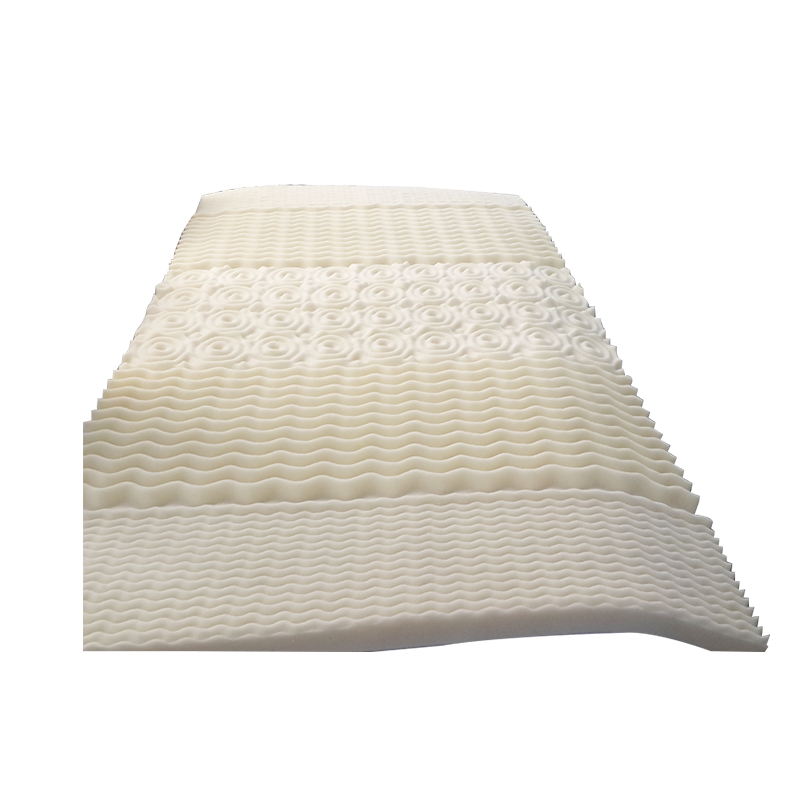 5-Zone Memory Foam Mattress Topper with Breathable Embossed CoverThis five-zone topper targets different support levels for the pelvis, shoulders, and legs, matching the body-weight distribution described nearby. Its removable, washable cover and partition compression design add practical value.View Product →
The zones matter because of how body weight is distributed. In a supine sleeping position the pelvis and upper torso carry the largest share of load, while the heels and head apply small but concentrated pressures. A well-calibrated 5-zone design lets the heavier zones sink less and the lighter zones sink more, which is the opposite of what happens on a uniform slab of foam.
How a 5-Zone Mattress Differs From a Standard Memory Foam Mattress
A standard memory foam mattress uses one foam formulation and one density across the entire surface. It responds the same way when you lie on your shoulder as when you lie on your lower back. That consistency has a cost: to hold the pelvis up, the foam must be firm enough that the shoulder cannot sink as much as it needs; to make the shoulder comfortable, the foam is often too soft to support the lumbar spine properly. Zoned construction removes that trade-off by calibrating firmness in each section individually.
| Comparison Point | Standard Memory Foam | 5-Zone Memory Foam |
|---|---|---|
| Support mapping | Single density and feel along the whole surface | Five calibrated densities or compression responses |
| Pressure management | Same response to every body part | Firmer under hips, softer under head, shoulders and legs |
| Spinal alignment | Depends entirely on overall mattress firmness | Engineered to keep the spine in a neutral position |
| Motion isolation | Excellent | Excellent - zoning does not reduce isolation |
| Ventilation options | Usually uniform foam with a top cover | Grooves or perforations can be placed in firmer zones |
| Price position | Lower for comparable quality | Usually 15-30% higher for comparable foam quality |
The difference is most visible for side sleepers. A 2015 review published in the Journal of Chiropractic Medicine examined multiple mattress studies and concluded that medium-firm mattresses produce better sleep quality and lower back discomfort than either very firm or very soft designs. A 5-zone mattress creates that medium feel precisely where the body needs it, instead of forcing one firmness on the entire body. For more on why the material behaves this way, read the full analysis of the features and advantages of memory foam mattresses.
Key Benefits of a 5-Zone Memory Foam Mattress
The advantages of a 5-zone construction become obvious once you stop thinking of a mattress as a flat surface and start thinking of it as a support system. Here are the benefits that matter most in daily use.
- Better spinal alignment. The firm pelvic and lumbar zones hold the heavy middle of the body at the correct height, while the softer head and shoulder zones let the lighter upper body settle level with it. The 2015 Journal of Chiropractic Medicine review identified neutral spinal alignment as a central reason medium-firm surfaces reduce back pain.
- Lower peak pressure on joints. Pressure-mapping studies show the highest contact pressures under the shoulders and hips. Zoned foam lowers those peaks by becoming softer at exactly those points. In-house pressure-mapping tests on a typical 5-zone topper show a reduction of roughly one-quarter in peak shoulder pressure compared with the same foam made uniform.
- Fewer position changes at night. When the pelvis sinks too far, the body naturally shifts to find relief, and each shift fragments sleep. A firmer pelvic zone keeps you closer to a neutral position, so you change position less often.
- Motion isolation that stays intact. Zoning changes firmness, not the viscoelastic nature of the foam. Movement on one side of the bed is still absorbed before it reaches the other side, which helps couples sleep without disturbing each other.
- Better-controlled warmth in the support areas. In many 5-zone designs the firmer lumbar and pelvic sections are carved with grooves or perforation channels that release heat around the waist, where contact is heaviest. That is a concrete factory-level solution to the classic dense foam heat complaint.
- Addresses a common sleep problem. According to the U.S. Centers for Disease Control and Prevention (CDC), more than one in three adults get less sleep than the recommended amount. A surface that distributes weight more evenly removes one fixable obstacle to sleeping through the night.
Density and Firmness: What to Look For in a 5-Zone Construction
Firmness and density are related but separate characteristics. Density tells you how much foam material is packed into a given volume, and it mainly affects durability and how deeply the body sinks. Firmness, measured as indentation load deflection (ILD), tells you how much force is needed to compress the foam, and it mainly affects how supportive the surface feels.
Density Determines Durability
For a 5-zone memory foam mattress or topper, the comfort layer should have a density of at least 40 kg/m3. Economy foams typically drop to 30-35 kg/m3 and tend to lose their recovery and zoning shape within 12 to 18 months. Foam in the 45-50 kg/m3 range returns to its original shape more slowly and keeps its zoning response for several more years, which is why almost all commercial hotel specifications start there.
Firmness Ranges Explained
| Firmness Level | Typical 25% ILD | Best Match | Where It Usually Belongs |
|---|---|---|---|
| Soft | 8-12 ILD | Side sleepers under 73 kg | Head, neck and shoulder zones |
| Medium | 13-18 ILD | Side and back sleepers | Legs and feet zone |
| Medium-firm | 19-24 ILD | Back and combination sleepers | Lumbar zone |
| Firm | 25 ILD and above | Stomach sleepers, heavier weights | Pelvic zone |
Choosing by Sleeping Position
- Side sleepers: look for a softer shoulder zone and a medium-firm lumbar zone. A topper thickness of 7-10 cm (3-4 in) lets the shoulder sink while the pelvic zone still keeps the hips from dropping.
- Back sleepers: balanced support is the priority. Keep the lumbar zone firm and the pelvic zone medium-firm; a 5-8 cm (2-3 in) topper is usually enough when the base mattress is still in good condition.
- Stomach sleepers: pick a firmer overall construction with a firm pelvic zone and a thin top layer of 2-5 cm (1-2 in) so the hips do not sink into an exaggerated curve that strains the neck.
If you are deciding between a full mattress and a topper, thickness is the simplest guide. A topper of 5-10 cm improves the comfort of a sound base mattress; a full mattress of 18-25 cm is its own support system. A 5-zone topper is the cheaper way to test whether zoned support solves your back pain before replacing the whole bed.
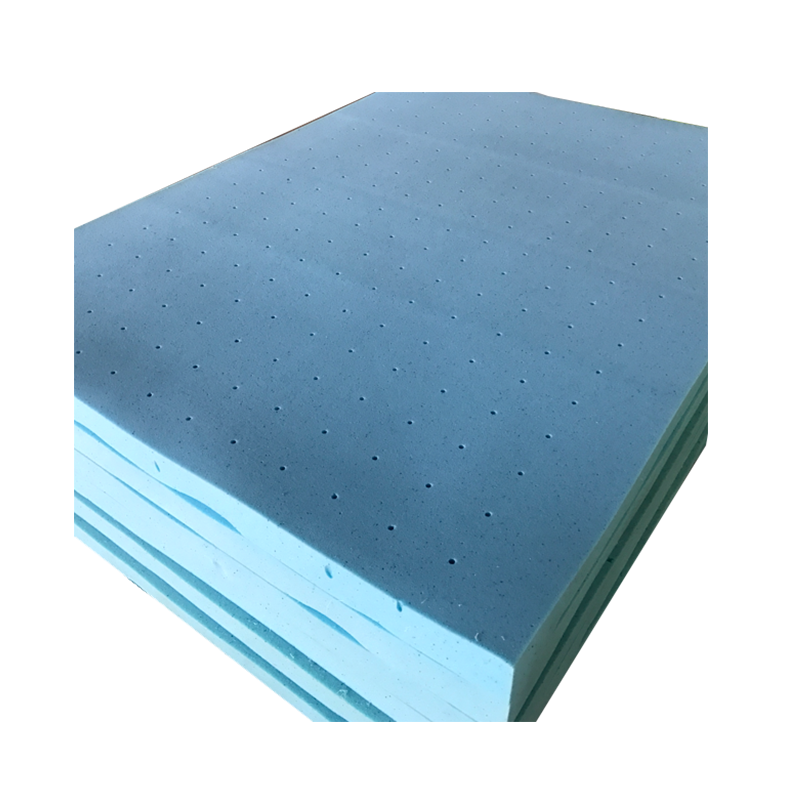 Memory Foam Mattress Topper with MDI Material and Custom SizesA thinner topper option for testing zoned support before replacing a full mattress. It uses MDI memory foam for even pressure relief and breathability, with any size available on request.View Product →
Who Should Consider a 5-Zone Memory Foam Mattress Topper?
A 5-zone topper is the fastest route to calibrated body mapping on an existing mattress. It is worth considering in these specific situations:
- Side sleepers who wake with shoulder or hip soreness on an even-firmness mattress.
- Back sleepers whose current bed feels too hard on the pelvis or too soft at the waist.
- Couples with different body weights, because a zoned surface adapts to both partners better than one uniform density.
- Households with a spare guest bed, where a zoned topper upgrades an older mattress at a fraction of the cost of a new bed.
- Hotels, serviced apartments, and dormitory buyers who want a consistent comfort profile across different base beds.
- Travellers and temporary housing, where a foldable zoned topper can move with the person and keep the same comfort level in different rooms.
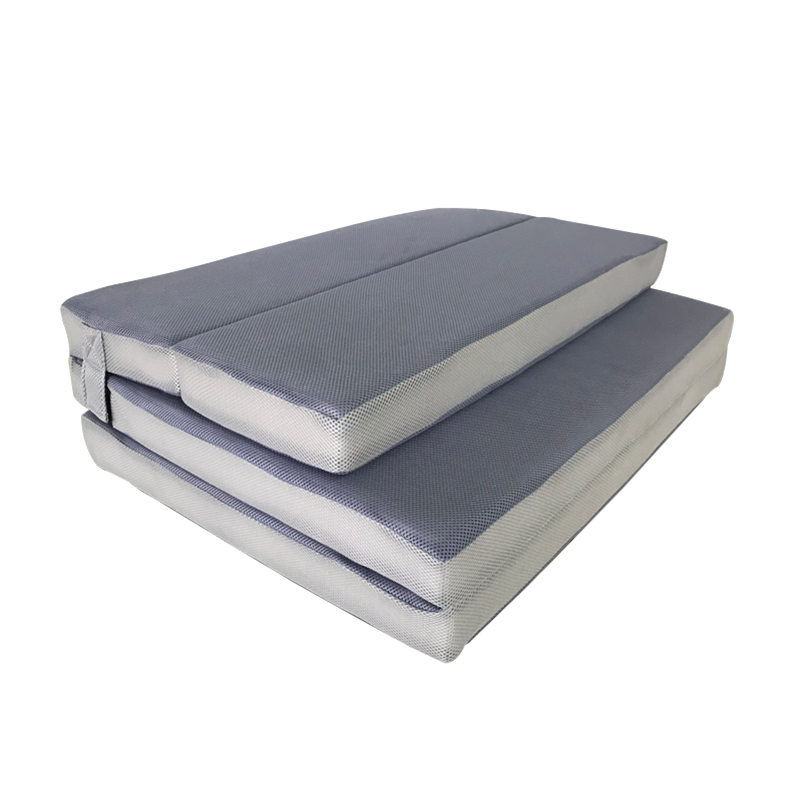 Foldable Memory Foam Mattress Topper for Multipurpose UseDesigned to be easily folded for storage or converted into a sofa, this memory foam topper suits small spaces and travel. It also offers customized sizing and pressure-relieving support.View Product →
Commercial buyers can also work directly with a memory foam product manufacturer to customise the zone layout, density, thickness, and cover fabric of a zoned topper under their own brand. This is a common route for hotel chains and online sleep brands that want a specific feel without investing in their own production lines.
How to Care for a 5-Zone Memory Foam Mattress
Zoned foam does not need complicated maintenance, but memory foam behaves differently from spring mattresses in a few practical ways.
- Rotate the mattress end to end every six months. This balances the load on the pelvic and lumbar zones and prevents the heavily used sections from settling faster than the rest.
- Always use a breathable, washable protector. It keeps dust and moisture away from the foam while allowing air circulation through the cover fabric. This is particularly useful for hotel and rental applications where hygiene turnaround is faster.
- Keep the room climate in check. Memory foam absorbs moisture, so a room with high humidity can make the foam recover more slowly. A dehumidifier in coastal regions often makes a visible difference to the feel of the bed.
- Never machine wash or soak the foam core. Spot-clean with a damp cloth and a mild detergent, then air dry flat in a ventilated room. The removable cover, by contrast, can be washed following the label instructions.
- Give new foam 24 to 48 hours to air out. The production smell disappears gradually, and the foam reaches its rated firmness only after it has fully expanded and ventilated.
Frequently Asked Questions About 5-Zone Memory Foam Mattresses
What does the five-zone layout mean on a memory foam mattress?
It means the sleeping surface is split into five horizontal sections that match the main weight-bearing parts of the body: head and neck, shoulders, lumbar spine, pelvis, and legs. Each section has a different firmness or density, with the firmest support normally placed under the pelvis and the softest response under the head and the feet.
Is a 5-zone topper as good as a full 5-zone mattress?
A topper provides zoned pressure relief on top of an existing mattress, but it cannot fix a worn-out or sagging base. A full mattress supplies the structural support itself and is the better long-term choice. If the base mattress is still firm and level, a 7-10 cm (3-4 in) zoned topper brings most of the comfort benefit at a much lower price.
What thickness should I choose for a 5-zone topper?
Side sleepers usually prefer 7-10 cm (3-4 in) so the shoulder can sink enough while the pelvic zone stays supportive. Back sleepers do well with 5-8 cm (2-3 in). Stomach sleepers should keep to 2-5 cm (1-2 in) to avoid too much sink in the central part of the body.
Will a 5-zone memory foam mattress sleep hot?
Memory foam retains more heat than spring systems, but zoned constructions often carve grooves, dimples, or channels into the firmer support areas, which improves airflow around the waist and lower back. If you sleep warm, choose a model with visible ventilation details and a breathable knit cover rather than relying on gel claims alone.
Can I use a 5-zone memory foam topper on an adjustable bed?
Yes, in most cases. Memory foam toppers are flexible and follow the bending angle of an adjustable base. Confirm the total thickness and flex rating with the factory before ordering, particularly for installations where the bed head is raised every night.
How long does a 5-zone memory foam mattress last?
With a comfort-layer density of at least 40 kg/m3, regular end-to-end rotation, and a protective cover, a zoned mattress typically keeps its support for 8 to 10 years. A topper used as a comfort layer usually lasts 3 to 5 years before noticeable softening. Replace it when the pelvic or lumbar zone feels clearly less supportive than it did when new.
A 5-zone memory foam mattress is not a marketing sticker; it is an engineering response to a repeated complaint. Firmer support under the pelvis, steady backing for the lumbar curve, and a softer cradle for the shoulders are exactly the combination that a uniform slab of foam cannot deliver. Whether you buy a full mattress, add a zoned topper to an existing bed, or specify a custom zoned construction for a commercial project, the same rules apply: check the density, confirm the zone positions with a diagram, and make sure the ventilation details are actually in the foam rather than only on the sales page.
Start with the zone map and a ruler. Everything else - comfort, durability, and pressure relief - follows from those two facts.