

 English
 عربى
عربى
Content
- 1 Raw Materials That Go Into Every Memory Foam Pillow
- 2 The Molding Process: How Raw Chemicals Become Solid Foam
- 3 How Pillow Density Affects Performance
- 4 Cutting, Shaping, and Finishing Techniques
- 5 How Gel Cooling, Shredded Foam, and Hybrid Designs Change Production
- 6 What Buyers Should Check Before Sourcing Pillows
- 7 Frequently Asked Questions
- 7.1 How long does it take to manufacture a memory foam pillow?
- 7.2 What density of memory foam is best for a pillow?
- 7.3 Can memory foam pillows be washed directly?
- 7.4 Why do memory foam pillows sometimes have a new smell?
- 7.5 How long does a memory foam pillow last?
- 7.6 What is the difference between molded and shredded memory foam pillows?
- 8 Conclusion
A memory foam pillow is made by mixing two liquid polyurethane compounds, pouring the mixture into a mold or block, and letting the chemical reaction transform the liquid into a viscoelastic solid. The complete process, from raw material mixing to final quality inspection, takes 48 to 72 hours in total, with the molding and curing stages accounting for about 60 to 90 minutes of that timeline. The remaining hours go into drying, washing, cutting, cover attachment, and batch testing. Each stage has specific controls that determine whether a pillow feels like premium memory foam or like a slab of ordinary polyurethane. The most critical quality indicators, such as density, compression recovery, and cell uniformity, are decided within the first five minutes of the chemical reaction, which means a manufacturer's process control and testing capability are the strongest predictors of the final product.
Raw Materials That Go Into Every Memory Foam Pillow
Memory foam, also known as viscoelastic polyurethane foam, relies on a precise chemical recipe. The two principal ingredients are polyol resin and isocyanate compounds, which react together to form the polyurethane matrix. To this base, manufacturers add catalysts that control reaction speed, surfactants that stabilize foam cell structure, blowing agents that create gas bubbles for the cellular network, and colorants or functional additives such as gel beads, bamboo fibers, or activated charcoal for specific properties.
The proportion of these ingredients determines the final foam density and responsiveness. According to industry benchmarks, memory foam density in commercial pillows ranges from around 40 kg/m³ to 90 kg/m³. Below 40 kg/m³, foam tends to lose its signature slow-recovery feel and can flatten within months of regular use. Above 90 kg/m³, the pillow can feel excessively heavy and rigid for standard sleeping positions. Most quality-focused manufacturers target a density range of 50 to 70 kg/m³, which gives the classic memory foam feel while maintaining structural integrity for several years.
The raw materials themselves have a measurable impact on the final foam. Higher-grade polyol systems produce more uniform cell structures, which leads to consistent pressure distribution across the pillow surface. Lower-grade polyol, by contrast, can create foam with irregular cells that feel lumpy and break down more quickly. This is the first reason why a supplier's sourcing and quality control of raw materials matters as much as the molding equipment. For a deeper look at how memory foam materials influence real-world comfort, refer to our discussion on memory foam pillow features and benefits.
The Molding Process: How Raw Chemicals Become Solid Foam
The molding process is the heart of the manufacturing line. It is where liquid chemicals transform into solid viscoelastic foam, and it determines almost everything about the final pillow.
Step 1: Chemical Mixing
Polyol resin and isocyanate are pumped into a high-speed mixing head at a typical rate of 3000 to 5000 RPM. The mixing head combines the components for only about 5 to 8 seconds before dispensing the mixture into molds. This precise mixing cycle is crucial: under-mixing leaves unreacted chemicals that produce uneven foam, while over-mixing introduces unwanted air bubbles that weaken the cellular structure. The temperature of the dispensed liquid is maintained at 30 to 50°C to keep the reaction rate within the target window.
Step 2: Pouring and Foaming
The mixed liquid is poured into either a large continuous block mold, which is used for traditional flat pillows, or individual shaped cavities, which are used for contour pillows. During the 8 to 15 minutes of foaming, the chemical reaction produces carbon dioxide gas that expands the liquid into foam. The mixture rises to several times its original volume, and the internal temperature climbs to 100 to 140°C as the exothermic reaction continues. Manufacturers must tightly control the mold temperature and the pour time to achieve consistent cell size across the entire pillow.
Step 3: Curing
After expansion, the foam is left to cure. In a continuous bun process, the large block sits for 15 to 30 minutes. In the molded process for pillows, the molds remain in a warm room or oven at about 60 to 80°C for 20 to 30 minutes. This step solidifies the cell structure and locks in the viscoelastic properties. A manufacturer's ability to control temperature and humidity during curing is one of the biggest differentiators between high-quality foam and foam that develops inconsistent cells.
Step 4: Demolding and Cooling
Workers or automated systems remove the foam pieces from their molds once curing is complete. After demolding, the pillows require 24 to 48 hours of cooling and drying in a ventilated warehouse. This phase is where any residual chemical odors evaporate. Industry data indicates that roughly 12% to 15% of raw material weight is lost during this drying process, mostly in the form of water and volatile organic compounds.
Step 5: Washing and Additional Drying
High-end manufacturers wash the cured foam in a dedicated water bath or use a VOC extraction chamber before the drying phase. Washing significantly reduces initial off-gassing. Foam industry research has found that a 4-hour wash cycle removes up to 40% of residual isocyanate compounds from the surface layer. After washing, foam pillows may need another 12 to 24 hours of air drying before they move to the next stage.
How Pillow Density Affects Performance
Density is established during the chemical mixing stage and cannot be corrected later. This is why understanding density specs is the most useful thing a buyer can do when evaluating a supplier. The table below shows the typical performance expectations for different density ranges.
| Density Range (kg/m³) | Foam Feel | Typical Use | Durability Expectation |
|---|---|---|---|
| 40 to 50 | Soft, fast rebound | Economy pillows, neck pillows | 1 to 2 years |
| 50 to 65 | Balanced, classic memory foam | Standard contour pillows | 2 to 4 years |
| 65 to 80 | Dense, slow recovery | Premium contour and cooling pillows | 4 to 6 years |
| 80 to 90 | Firm, substantial | Lumbar support and orthopedic pillows | 5 to 8 years |
These ranges are widely accepted across the foam manufacturing industry. As a practical rule, the denser the foam, the more energy it absorbs and the slower it returns to its original shape. Density is measured by weighing a known volume of foam. Reputable manufacturers test every production batch and ensure the foam's final density stays within a ±5% tolerance of the target specification.
Cutting, Shaping, and Finishing Techniques
The molding process determines the raw pillow shape. For contour pillows, the product is poured directly into a shaped mold, which gives the pillow a uniform cell structure across its entire surface. For traditional flat pillows, the foam comes from a large continuous bun that is cut with high-tension wire blades into individual slab pieces. The method matters in terms of quality and feel.
Molded Contour Pillows
In the molded process, the foam cures directly inside the contour cavity, so the outer skin of the pillow is naturally smooth and dense. The cell structure remains consistent across the entire surface, which gives the pillow a more predictable feel. Molded contour pillows are ideal for products that require precise curves and elevated edge support, such as side-sleeping and cervical support designs. Our 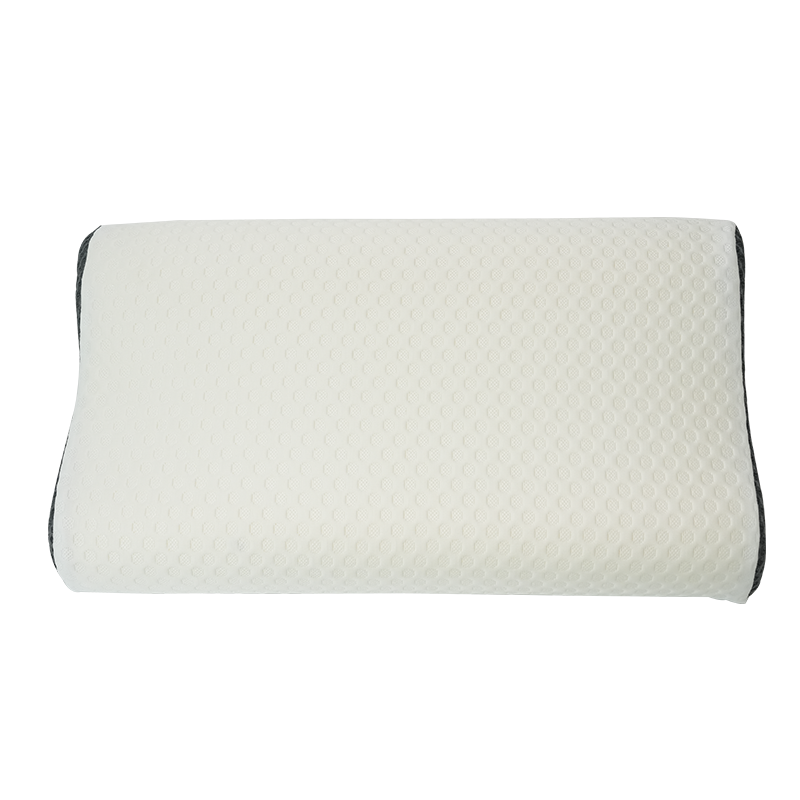 Memory foam contour pillow with adaptive support and dual heightsThis molded contour pillow features a high-density memory foam core that adapts to head and neck weight for pressure relief. Its ergonomic curve and dual-height design accommodate different sleeping positions, making it a suitable choice for personalized comfort.View Product → uses this process to achieve its ergonomic curves.
Cut Traditional Pillows
Cut traditional pillows are sliced from a foam bun. Each cut creates a fresh, open surface, which makes the pillow softer and fluffier than a molded product. However, open-cut surfaces are also more susceptible to compression loss in high-load areas, especially where the head and neck contact the foam. For a classic traditional feel with premium material, our 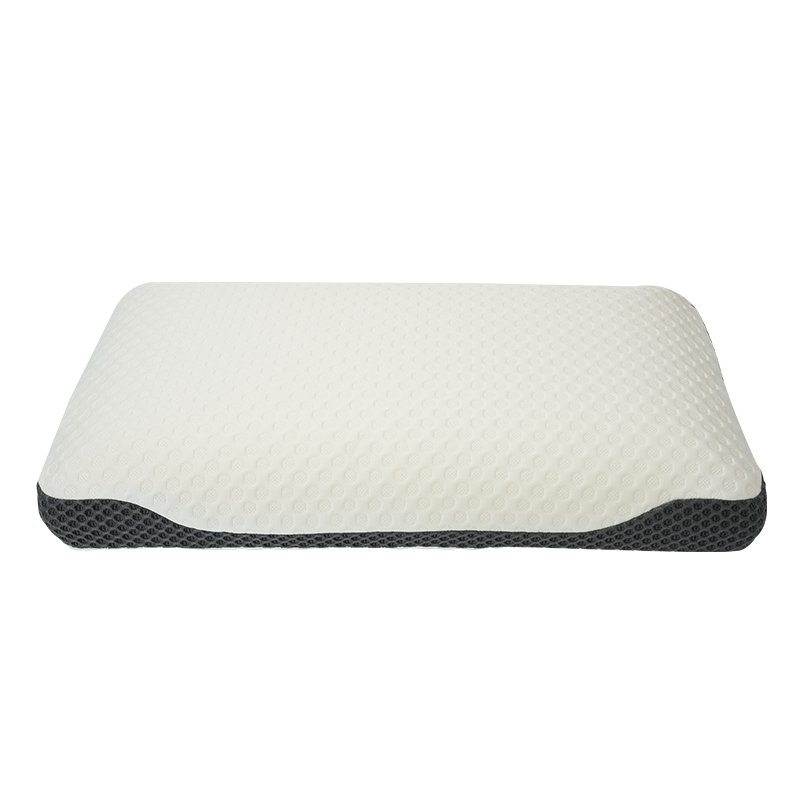 High-density memory foam traditional pillow for stable neck supportThis traditional pillow uses high-density memory foam to maintain the natural cervical curve, offering consistent support. Its open-cut surface provides a soft, fluffy feel while resisting compression, ideal for those who prefer a classic, stable pillow.View Product → uses a high-density bun that resists flattening even after extended use.
CNC Shape Cutting for Complex Designs
For complex shapes like multi-zone contour pillows, manufacturers often add a CNC cutting step after molding. A steel blade or laser follows a digital pattern to create precise curved surfaces. Examples include the saddle-shaped grooves and V-shaped contours that side sleepers need for shoulder relief. CNC cutting provides tolerances within 1 millimeter, which is far tighter than what can be achieved manually. This capability matters because small deviations in the contour surface can create uneven pressure points under the neck and head.
Cover Selection and Sewing
The cover is an outer layer that protects the foam and adds functionality. Common cover options include organic cotton, bamboo rayon, recycled polyester, and stretch knit fabric with gel-infused cooling fiber. Covers are pre-cut, sewn, and fitted onto the foam. A zipper closure is added so the user can remove and wash the cover separately. For memory foam pillows, a protective inner shell is often included to keep the foam from direct contact with skin and to make it easier to insert the foam into the outer cover. The inner shell also helps reduce foam compression from fabric friction.
Final Inspection and Packaging
The finished pillow undergoes multiple checks. Visual inspection under direct light catches surface defects like pinholes, discoloration, or uneven contour. Density verification uses a chemical weighing balance to confirm the batch density. Recovery testing uses a specialized indenter to measure how quickly foam returns to shape after compression. A compression test simulates 1,000 cycles to check for permanent deformation. Once a pillow passes these tests, it is compressed and vacuum-sealed in plastic. According to shipping industry data, vacuum compression reduces package volume by roughly 75% to 80%, which significantly lowers logistics costs for international shipments.
How Gel Cooling, Shredded Foam, and Hybrid Designs Change Production
Not every pillow follows the same manufacturing path. The key variations come from the functional features that are added during production, and each one requires different controls.
Gel Cooling Pillows
Gel insertion is usually done during the molded process. The mold, with a gel pad positioned inside, receives the liquid foam. When the foam expands around the gel, the two become bonded as a single unit. Pillows of this type typically use a 20% to 40% gel coverage area for a meaningful cooling effect. The gel pad thickness is controlled to within 1 millimeter. This ensures the gel layer does not create a hard edge or an uneven support surface. Our 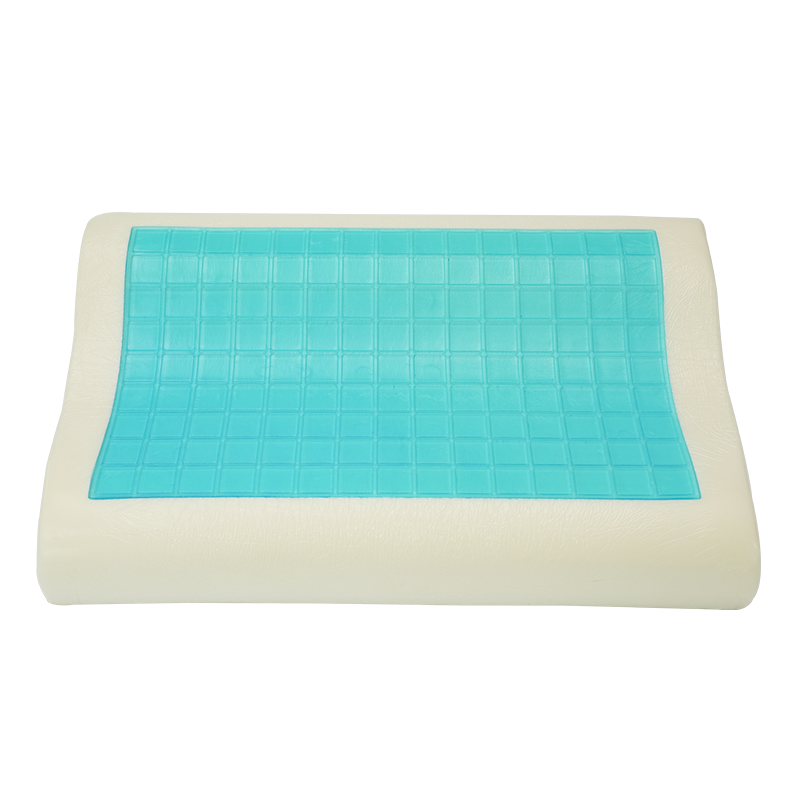 Contour gel-infused memory foam pillow with cooling surfaceThis contour pillow combines a wave-shaped memory foam base with a bonded silicone gel layer. The gel provides a cooling touch, while the ergonomic design supports the head, neck, and shoulders, helping to disperse pressure and improve sleep temperature.View Product → uses a completely bonded gel layer that stays precisely positioned inside the contour shape, providing consistent heat dissipation across the sleep surface.
Shredded Memory Foam Pillows
Instead of pouring foam directly into pillow-shaped molds, manufacturers first create a low-density foam block, grind it into small pieces, and blow those pieces into a pillow shell or knit liner. The shredded foam is measured by weight. A standard queen-size shredded memory foam pillow typically holds 800 to 1200 grams of shredded foam. The fill volume is adjusted to achieve an ideal loft, which usually ranges from 10 to 14 cm in the center of the pillow. The biggest quality challenge in this process is achieving consistent fill distribution. Manufacturers use air-blowing and mechanical fluffing equipment to ensure the shredded pieces settle evenly, avoiding lumps or hollow zones.
Bamboo and Natural Fiber Blends
Many modern pillows incorporate bamboo fiber into the cover or even into the foam itself. The production process for bamboo-infused foam involves adding bamboo powder or fiber to the foaming mix. The challenge is maintaining consistency: too much bamboo fiber lowers the foam's structural integrity, while too little has a negligible effect. Manufacturer testing suggests that an addition of 1.5% to 3.5% by weight is the effective window for bamboo foam that still retains proper elastic recovery. In the cover, bamboo fabrics are treated and sewn in the same way as standard textiles, with an added focus on breathability and moisture wicking.
What Buyers Should Check Before Sourcing Pillows
For B2B buyers, there are practical questions to evaluate when choosing a memory foam pillow supplier. The first is density tolerance. A tolerance of ±5% is a minimum expectation. Some manufacturers run a density test on every production batch and keep the results on file for any order. This allows buyers to trace both the density and the chemical batch of any shipment.
The second factor is foam compression recovery after a standard test cycle. In industrial quality testing, compression is applied in a 3-second cycle. After 1,000 cycles, a good memory foam pillow should recover at least 85% of its original height. Budget foam often loses more than 20% of its height after repeated load cycles, which leads to a pillow with permanent indentations and uneven support.
The third factor is source transparency. Buyers should be able to see what happens at each stage of production, from the chemical mixing process and foam batch number to mold inspection records and drying schedules. A supplier who can show detailed process documentation is more likely to produce consistent products. In this context, understanding pressure absorption behavior becomes useful. Our factory approach to pressure relief can be seen in our analysis of how memory foam lumbar support provides back pressure absorption, which highlights how foam density and density distribution affect the body's pressure relief.
Beyond these three, you should also evaluate the foam's air permeability and off-gassing behavior. Quality foam should be breathable enough to release body heat. Off-gassing should be minimal, and the supplier should be able to confirm the foam has undergone an effective drying cycle. These are not optional extras; they are indicators of the manufacturer's quality control depth.
Frequently Asked Questions
How long does it take to manufacture a memory foam pillow?
A complete production cycle takes 48 to 72 hours from chemical mixing to final quality testing. The molding and curing stages take about 60 to 90 minutes. For large orders, the molding stage runs in parallel across multiple mold stations, so a single production line can complete hundreds of pillows per day.
What density of memory foam is best for a pillow?
For standard support and long-term durability, 50 to 65 kg/m³ is the industry target for commercial memory foam pillows. This range provides the classic slow-recovery feel while maintaining structural integrity for several years. Lower densities below 50 kg/m³ are softer but less durable; higher densities above 65 kg/m³ provide firmer support and a longer lifespan.
Can memory foam pillows be washed directly?
No, memory foam should never be directly washed in a machine. Moisture destroys the cellular structure and leads to crumbling. Most manufacturers recommend wiping the surface with a mild detergent solution and air drying. The pillow cover can be removed and washed separately.
Why do memory foam pillows sometimes have a new smell?
The smell comes from residual volatile organic compounds off-gassing from the foam. This is normal for fresh foam. For most memory foam pillows, the smell dissipates within 3 to 5 days when aired out in a ventilated room. A reliable manufacturer, such as our bamboo-shredded foam facilities, ensures that the foam undergoes a 24 to 48 hour drying period before covering and packaging to reduce the initial odor.
How long does a memory foam pillow last?
With a density of 50 to 65 kg/m³ and proper use, a memory foam pillow typically lasts 2 to 4 years. Higher density foam above 65 kg/m³ can extend this to 4 to 6 years. The single biggest factors are the original density, the foam's compression resistance, and how well the cover is maintained to prevent outer degradation.
What is the difference between molded and shredded memory foam pillows?
Molded pillows are produced by pouring foam into a shaped mold, resulting in a uniform, one-piece structure. Shredded pillows are made by grinding a foam block into pieces and filling a cover. Molded pillows provide consistent support and are less likely to develop flat spots. Shredded pillows offer better airflow and are easier to adjust by hand for personal comfort. Both are valid manufacturing approaches, but molded pillows are usually recommended for side sleepers who need a stable contour.
Conclusion
The way a memory foam pillow is made determines how it will feel, how long it will last, and whether it truly delivers on the promise of pressure-relieving support. From precision chemical mixing and mold curing to CNC shaping, cover stitching, and batch testing, every step influences the final product. The most tangible parameters to evaluate when sourcing are target density between 50 and 70 kg/m³, compression recovery of at least 85% after 1,000 cycles, and transparent process documentation at every stage. These are the details that, over time, set a premium memory foam pillow apart from a budget alternative.
Whether you are a distributor, an e-commerce seller, or a bedding brand looking for reliable production capacity, understanding how a pillow is made gives you a clear advantage. It lets you ask precise questions, compare suppliers on a fair basis, and make purchasing decisions based on measurable performance rather than subjective marketing claims.