

 English
 عربى
عربى
Content
Memory Foam Pillow Weight Information
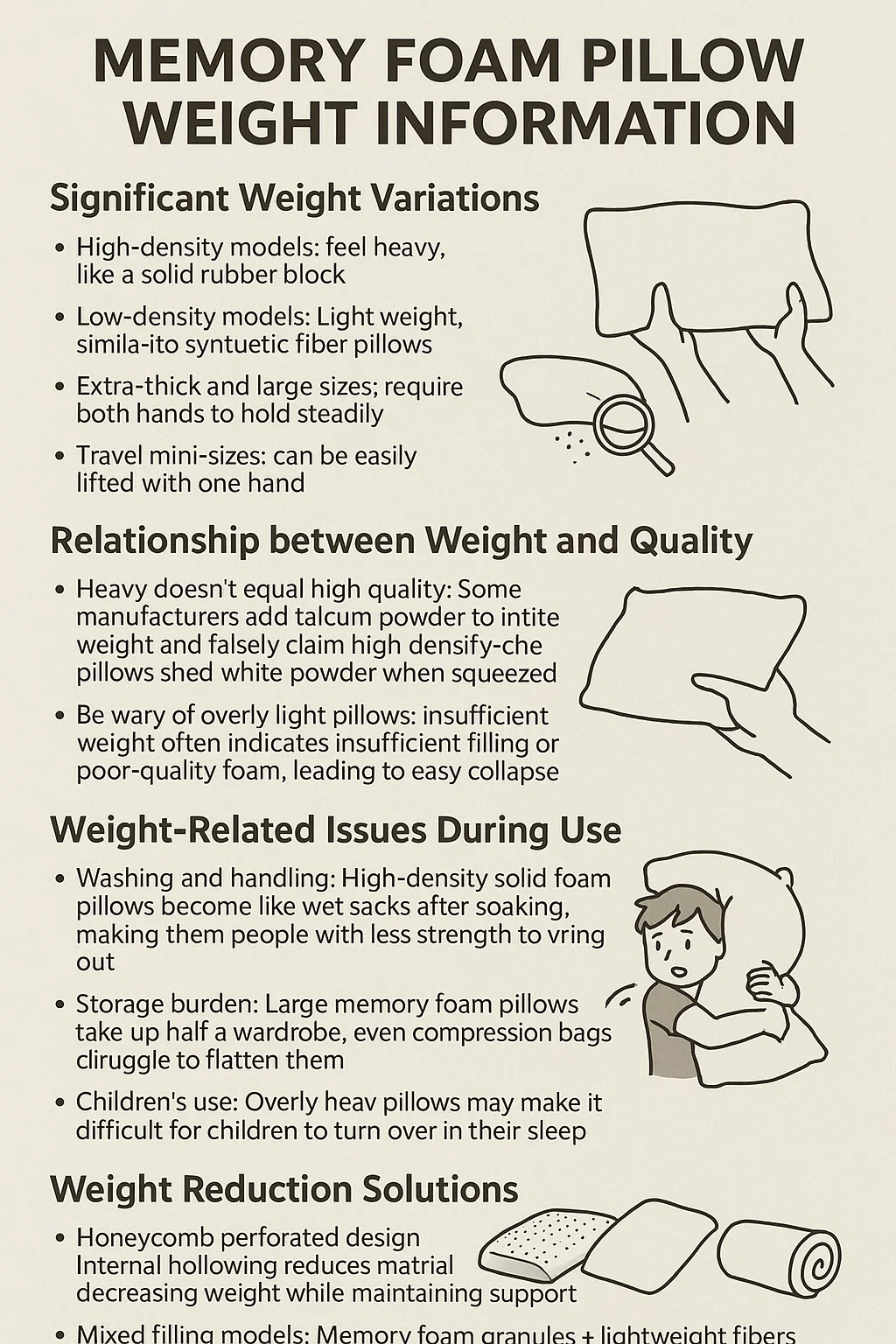
1. Significant Weight Variations
Memory foam pillows have inconsistent weights, mainly influenced by density and size:
High-density models: Feel heavy, like a solid rubber block.
Low-density models: Lightweight, similar to synthetic fiber pillows.
Extra-thick and large sizes: Require both hands to hold steadily.
Travel mini-sizes: Can be easily lifted with one hand.
2. Relationship between Weight and Quality
Heavy doesn't equal high quality: Some manufacturers add talcum powder to increase weight and falsely claim high density; these pillows shed white powder when squeezed.
Be wary of overly light pillows: Insufficient weight often indicates insufficient filling or poor-quality foam, leading to easy collapse.
3. Weight-Related Issues During Use
Washing and handling: High-density solid foam pillows become like wet sacks after soaking, making them difficult for people with less strength to wring out.
Storage burden: Large memory foam pillows take up half a wardrobe; even compression bags struggle to flatten them.
Children's use: Overly heavy pillows may make it difficult for children to turn over in their sleep.
4. Weight Reduction Solutions
Honeycomb perforated design: Internal hollowing reduces material, decreasing weight while maintaining support.
Mixed filling models: Memory foam granules + lightweight fibers, 1/3 lighter than solid models.
Rolled packaging: Vacuum compression doesn't change the weight, but the smaller volume makes them easier to handle and store.