

 English
 عربى
عربى
Content
- 1 You Can Learn to Sleep on Your Back — Here Is the Direct Answer
- 2 Why Sleeping on Your Back Is Worth the Effort
- 3 Why Your Body Fights Back Sleeping at Night
- 4 The Step-by-Step Training Plan That Actually Works
- 5 Pillow Height and Type Matter More Than Willpower
- 6 Mattress Support and the Knee-Elevation Trick
- 7 Common Transition Mistakes and the Fix for Each
- 8 Who Should Not Force Back Sleeping
- 9 Frequently Asked Questions About Back-Sleeping Training
- 9.1 How long does it really take to get used to sleeping on your back?
- 9.2 Will I stop snoring if I sleep on my back?
- 9.3 How can I stop rolling onto my side during the night?
- 9.4 Is back sleeping better for neck pain or worse?
- 9.5 Should I use a firm or soft memory foam pillow for back sleeping?
- 9.6 Can I train myself to sleep on my back while traveling?
- 9.7 What if sleeping on my back makes my lower back hurt in the morning?
- 10 Final Thoughts: Build the Setup, Then Build the Habit
You Can Learn to Sleep on Your Back — Here Is the Direct Answer
Yes, back sleeping is a trainable habit, and for most people it takes two to four weeks of consistent practice before the position feels natural, not a single night. The real secret is not forcing yourself to stay still; it is configuring your pillow and mattress so your body does not want to roll over in the first place.
From a memory foam manufacturer's point of view, we see the same mistake daily: sleepers blame themselves for weak discipline when the actual culprit is a pillow loft that is too high or a mattress that lets the hips sink too deep. Fix the physical support first, and the position follows.
Here is the direct summary of the plan in this article: use a low-loft pillow that keeps your neck neutral, place a pillow under your knees, practice lying flat for 10 to 15 minutes during the day, and keep a gentle side barrier for the first two weeks. That covers roughly 80 percent of what it takes. The remaining 20 percent is choosing foam with the right density and knowing which small discomforts are a normal part of the transition.
Why Sleeping on Your Back Is Worth the Effort
The benefits of supine sleeping are supported by clinical sleep guidance and anatomy rather than by marketing opinion. Here is what you actually gain:
Spinal alignment. On your back, your head, shoulders, and pelvis can rest in one neutral plane, which reduces the sideways bending that side sleeping creates when your pillow is too thick. Physiotherapists generally describe this as the easiest position for keeping the cervical and lumbar spine in a natural curve, provided the pillow height matches your body size. (Source: Sleep Foundation, sleepfoundation.org)
Even pressure distribution. Unlike side sleeping, which concentrates body weight on the shoulder and hip, back sleeping spreads pressure over a much larger surface area. This is why memory foam pillows and mattress toppers use a flat body-support layer for back sleepers: the foam deforms evenly rather than creating a single pressure hotspot.
Fewer facial compression wrinkles. When you press your face into a pillow for seven hours every night, repeated creasing can leave temporary lines that may become permanent over years. Back sleepers keep their face free of contact, which is why the Sleep Foundation lists this position as potentially reducing wrinkle formation.
Better acid reflux control. With the head slightly elevated on a wedge or a firm pillow, back sleeping can help keep stomach acid from riding upward. The Sleep Foundation notes this position may reduce reflux symptoms for some people, though those with severe GERD are usually better off on the left side.
To make the comparison practical, here is how the three main positions stack up based on sleep survey data and clinical guidance:
| Position | Approx. share of adults | Best for | Main watch-out |
|---|---|---|---|
| Side | ~50–60% | Snoring, pregnancy (left side) | Shoulder pressure, pillow height mismatch |
| Back | ~10–20% | Spinal alignment, pressure distribution, wrinkles | Sleep apnea in some people |
| Stomach | ~10–15% | Feels familiar to many | Neck rotation, lower-back strain |
These percentages are estimates from large consumer sleep surveys and vary by study population, but the ranking is consistent across sources: side sleepers dominate, back sleepers are the minority, and stomach sleepers are the smallest group.
Why Your Body Fights Back Sleeping at Night
If you have already tried sleeping on your back and failed, the problem usually falls into one of these four categories:
- Position memory. After thousands of nights on your side, your nervous system treats that position as the default and will attempt to roll back into it the moment you enter a lighter sleep stage.
- Pillow pitch. A pillow that feels perfect when you hug it sideways often feels like a slope when you lie flat on it. The sensation of your chin being pushed toward your chest triggers a subconscious instinct to turn away.
- Lower-back arching. On a mattress that is too soft, the hips sink, the lumbar spine arches, and a dull pressure builds in the lower back. Your body looks for relief by turning over.
- Cold and curling. When your shoulders feel exposed without a pillow pressed against your chest, you naturally curl into a fetal position to preserve warmth.
None of these is a moral failing. They are mechanical problems, and they respond to mechanical fixes: lower the pillow loft, lift the knees, add side support, and adjust the bed surface.
The Step-by-Step Training Plan That Actually Works
Use this four-phase plan, which is based on how sleep-position habits are usually formed in clinical sleep coaching rather than on any one-night miracle approach.
Phase 1: Preparation — Days 1 to 7
- Measure your pillow. Lie flat on your back, relax your neck, and look straight at the ceiling. The space between your head and the bed should be filled by the pillow with only moderate compression. If your chin tilts up, the pillow is too low; if it tucks down, the pillow is too high. A back sleeper typically needs a compressed loft of about 3 to 5 inches (8 to 12 cm).
- Add a knee pillow. A 4- to 6-inch (10 to 15 cm) pillow under your knees keeps the lower back in a neutral curve and removes the main trigger for rolling.
- Practice during the day. Spend 10 to 15 minutes in the afternoon lying on your back while breathing slowly — inhale for 4 counts, exhale for 6 counts. This gets your body acquainted with the position while you are fully awake, so the night version feels less foreign.
Phase 2: Initial Transition — Weeks 2 to 3
- Build a pillow barrier. Place a firm pillow on each side of your torso, or one vertical pillow along your back. The barrier does not trap you; it simply makes rolling over feel inconvenient for the first two weeks.
- Set a four-hour target. Instead of trying to survive the whole night on your back, aim for the first three to four hours. If you wake up on your side, roll back without guilt and continue.
- Keep a sleep journal. Note how many times you wake and where you find yourself each morning. Most people see a clear improvement by the end of week 2.
Phase 3: Reinforcement — Weeks 3 to 4
Reduce the side barriers to one pillow or remove them entirely. Extend your target to the first five to six hours of the night. If you wake up on your back more than 70 percent of the time, you are ready for the final phase.
Phase 4: Maintenance — Ongoing
Keep your knee pillow and check your neck pillow every season. Memory foam softens with heat, so a pillow that was ideal in winter may feel too soft in summer. When you travel, bring your regular pillow if possible; an unfamiliar hotel pillow's loft is the most common reason people regress during the first few nights away.
A useful breathing trick from sleep coaching: once you are lying flat, breathe in for a count of 5 and out for a count of 8. The longer exhale activates the parasympathetic nervous system, which lowers heart rate and makes it easier to stay still instead of shifting position.
Pillow Height and Type Matter More Than Willpower
Back sleepers consistently do best with a compressed loft of about 3 to 5 inches (8 to 12 cm) under the head, measured at the highest point of your neck curve. That is noticeably thinner than what most side sleepers use, which is why a side-sleeper pillow feels like a hill when you try to sleep on your back with it.
Contour pillows are particularly effective for this transition because the central groove lowers the head position while the raised neck roll supports the cervical curve, preventing the chin from tucking toward the chest. A memory foam contour pillow of moderate density keeps that support through the night and recovers its shape during the day.
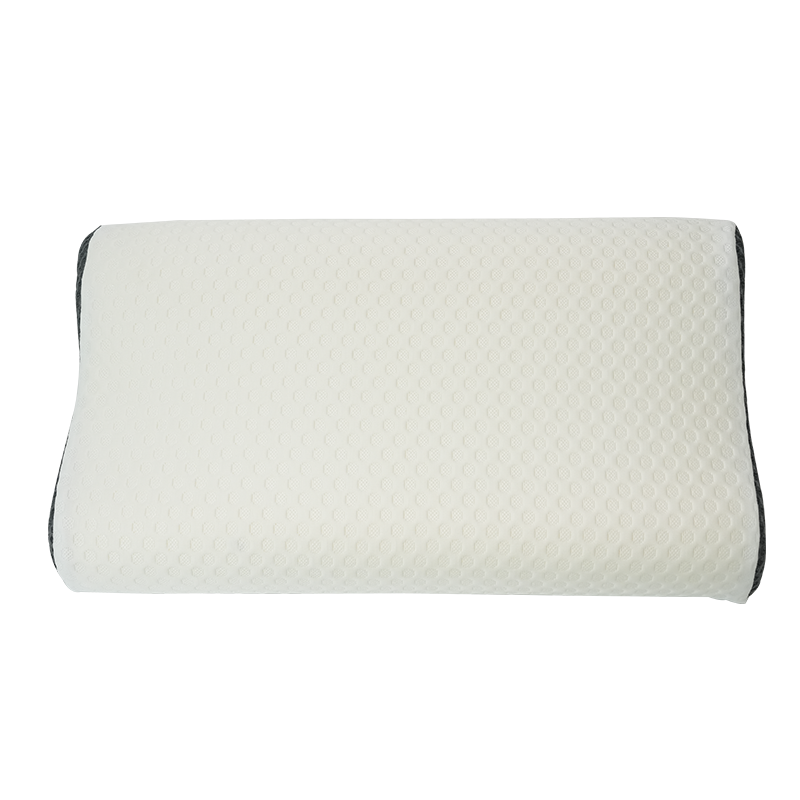 Wholesale Memory foam contour pillow Suppliers, OEM/ODM Company - Nantong Ramya Nantong Ramya Home Technology Co, ltd is China OEM/ODM Memory foam contour pillowsuppliers and wholesale company, Customizable production...View Product →
If your room runs warm or you sleep in a hot climate, a ventilated or gel-infused version helps. The contour memory foam gel cooling pillow provides the same neck support while keeping the surface cooler, which matters because heat makes memory foam sink deeper and can shorten the effective loft overnight.
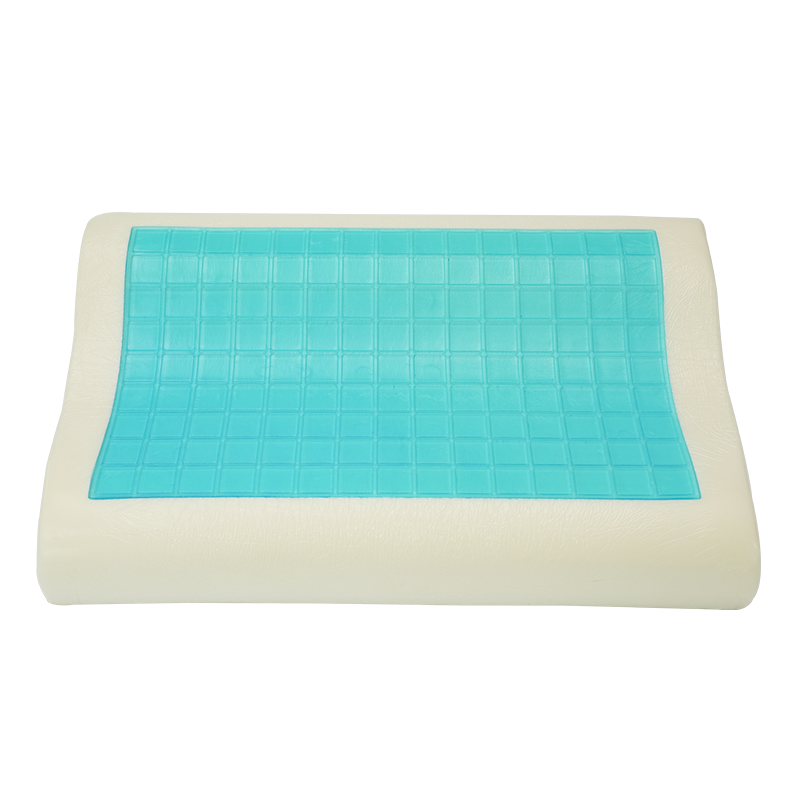 Wholesale Contour memory foam gel cooling pillow Suppliers, OEM/ODM Company - NaNantong Ramya Home Technology Co, ltd is China OEM/ODM Contour memory foam gel cooling pillowsuppliers and wholesale company, Customizabl...View Product →
For people who dislike contoured shapes, a traditional flat silhouette is still a valid back-sleeping option. A memory foam traditional pillow with a low, uniform profile provides a neutral cradle for back sleepers, as long as the loft is not too tall.
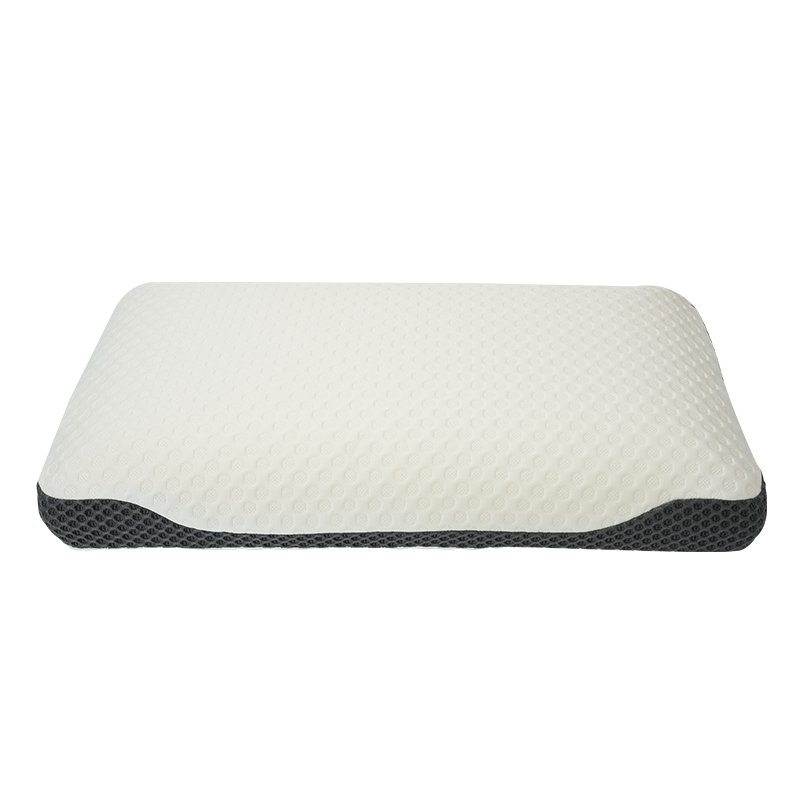 Wholesale Memory foam traditional pillow Suppliers, OEM/ODM Company - Nantong RaNantong Ramya Home Technology Co, ltd is China OEM/ODM Memory foam traditional pillowsuppliers and wholesale company, Customizable produc...View Product →
Beyond shape, pay attention to density and venting. Higher-density foam, roughly 2.5 to 4.0 lb/ft³ (40 to 64 kg/m³), holds its loft longer, while vent holes or open-cell formulations release body heat. We have covered this in more detail in our explainer on why density and vent design affect pillow performance — it is worth reading before you buy, because foam that is too dense for your body weight feels like a log rather than a support.
If you are switching from side to back sleeping, also read our guide on the purpose of different pillow heights, because the correct height depends on your shoulder width and mattress firmness, not just on your sleeping position.
Mattress Support and the Knee-Elevation Trick
Your mattress is the second half of the equation. For back sleeping, a medium-firm surface — roughly 5 to 6 on a 10-point firmness scale — is the most common recommendation in clinical sleep guidance. A mattress that is too firm creates pressure under the pelvis; one that is too soft lets the hips sink, arching the lower back and triggering the rolling reflex discussed earlier.
The knee pillow is the cheapest mattress fix you can make. Lifting the knees 4 to 6 inches slightly tilts the pelvis backward, flattens the lumbar curve, and takes tension off the hip flexors. A folded memory foam mattress topper can serve the same purpose if you do not want to buy a separate knee pillow; just slide it under your knees once you are lying down.
Because a mattress is a long-term purchase, read our article on the features and advantages of memory foam mattresses before choosing a topper or mattress layer. A 2- or 3-inch memory foam topper can transform an overly firm mattress into a back-sleeping-friendly surface without replacing the whole bed.
How to test your current mattress: lie on your back with your legs straight, then slide one hand under your lower back. If the gap is larger than the thickness of your hand, the mattress is too firm. If you cannot slide your hand through at all and the hips feel sunken, it is too soft. Either way, a knee pillow plus a topper can correct the problem before you commit to a new bed.
Common Transition Mistakes and the Fix for Each
Over the years our customers have reported the same transition obstacles. Here is how to spot them early and correct them:
| Mistake | What happens | Correct approach |
|---|---|---|
| Using a tall side-sleeper pillow | Neck bends upward, breathing feels blocked, you roll off the back | Switch to a low-loft or contour pillow with a 3–5 in (8–12 cm) compressed height |
| No knee support | Lumbar spine arches, lower-back pressure builds | Place a 4–6 in (10–15 cm) pillow under your knees |
| Cold shoulders | Body curls inward to preserve heat | Use a duvet that covers the shoulders, or raise the room temperature by 1–2°C |
| Quitting after three uncomfortable nights | The habit never gets a chance to form | Commit to 14 nights; discomfort usually drops sharply after night 5 |
One additional mistake is less obvious: waking up on your back but with your head turned hard to one side. This happens when the pillow loft is slightly higher on one side, usually from an older pillow that has developed an uneven compression pattern. Use a flat, symmetrical pillow or check that your contour pillow is centered before you close your eyes.
Who Should Not Force Back Sleeping
Back sleeping is a strong option for most healthy adults, but it is not for everyone. If any of the following applies to you, respect your body and choose a different position rather than forcing the habit:
- People with obstructive sleep apnea. In many cases, supine sleep makes airway collapse more likely, which can worsen apnea events. Sleep physicians usually test positional response before recommending back sleeping.
- Pregnant women after the first trimester. The growing uterus can compress the vena cava when lying flat on the back, reducing blood flow. Left-side sleeping is the standard clinical recommendation during pregnancy.
- People with severe, uncontrolled GERD. Even with an elevated head, some people experience more reflux when flat on their back; left-side sleeping is generally better tolerated.
- Certain lumbar spine conditions. If lying on your back with your legs straight increases nerve pain or radiating leg symptoms, keep a pillow under your knees or try a slightly reclined position instead.
If you are unsure, a simple rule applies: the best sleeping position for you is the one that leaves you pain-free in the morning and does not make your symptoms worse at night.
Frequently Asked Questions About Back-Sleeping Training
How long does it really take to get used to sleeping on your back?
From habit-formation guidance and real user feedback, most people feel comfortable within 10 to 14 nights, and fully natural within 4 to 6 weeks. The first few nights are the hardest because the body keeps trying to return to its old default position.
Will I stop snoring if I sleep on my back?
No — back sleeping usually makes snoring worse, not better. Snoring is most common in the supine position because the tongue and soft palate fall backward against the airway. If snoring is your primary concern, side sleeping is the better choice.
How can I stop rolling onto my side during the night?
Use the three-part barrier: a pillow under your knees, a pillow or rolled blanket at each side of your torso, and a low-loft pillow under your head. After two to three weeks, your body usually stops attempting the roll altogether because the upright position no longer feels like the uncomfortable one.
Is back sleeping better for neck pain or worse?
For many people with chronic neck pain, back sleeping is better because the neck stays in a neutral position instead of being bent sideways for hours. The key condition is pillow height: a 3- to 5-inch compressed loft that supports, but does not lift, your head. People who report that back sleeping worsens neck pain are almost always using a pillow that is too high or too flat.
Should I use a firm or soft memory foam pillow for back sleeping?
Neither extreme works well. Look for a medium-density memory foam pillow, roughly 2.5 to 3.5 lb/ft³ (40 to 56 kg/m³), with enough resilience to hold a contour when your head settles in. If your head sinks too deep, you lose support; if the pillow barely sinks, the surface feels hard and you will shift frequently.
Can I train myself to sleep on my back while traveling?
Yes, but the hotel pillow can undo days of progress in one night. Ask for a flat pillow, or bring your own low-loft pillow. The rest of the routine — knee support and a side barrier — works identically in any bed.
What if sleeping on my back makes my lower back hurt in the morning?
The most common cause is a lack of knee elevation. Without a pillow under the knees, the hip flexors stay slightly stretched and the lumbar spine arches more than it should. Add a 4- to 6-inch pillow under your knees for one week, and most people see the morning pain disappear. If it persists, the mattress support usually needs adjustment.
Final Thoughts: Build the Setup, Then Build the Habit
Training yourself to sleep on your back is a mechanical process, not a personality test. Start with the correct pillow height, add knee support, keep a gentle side barrier for two weeks, and accept that the first five nights will feel unfamiliar. The reward is a sleeping position that supports your spine, reduces facial compression, and distributes pressure evenly across your body.
If you are ready to choose the right support, pay close attention to density, loft, and heat management before you buy. A well-matched memory foam pillow will hold its shape for years and make the transition feel dramatically easier than it does on a mismatched pillow. Give the plan a full month, and give your body the support it needs for the first two weeks — that combination is what actually works.