

 English
 عربى
عربى
Content
- 1 The Short Answer: How to Clean a Foam Mattress
- 2 Why Cleaning a Foam Mattress Is Different from Other Mattress Types
- 3 What You Need Before You Start
- 4 Step-by-Step: Routine Cleaning of a Foam Mattress
- 5 How to Remove Stains from a Memory Foam Mattress
- 6 How to Deep Clean a Memory Foam Mattress
- 7 Drying a Foam Mattress Properly After Cleaning
- 8 How to Get Rid of Odors in a Foam Mattress
- 9 Can You Wash a Foam Mattress Topper?
- 10 Preventing Future Stains and Keeping Your Memory Foam Mattress Clean Longer
- 11 Signs Your Foam Mattress Is Beyond Cleaning
- 12 Common Mistakes to Avoid When Cleaning a Foam Mattress
The Short Answer: How to Clean a Foam Mattress
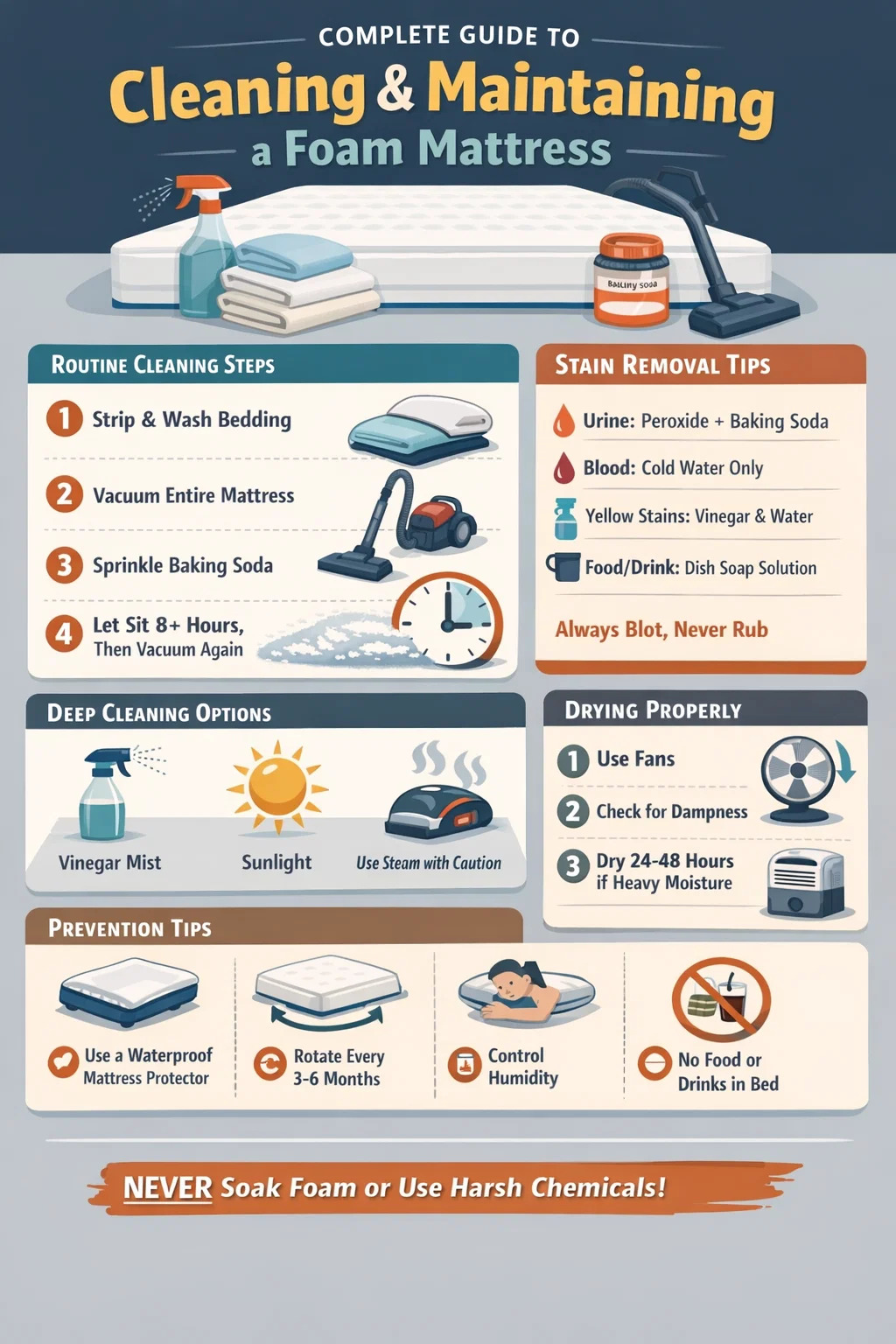
To clean a foam mattress, strip the bedding, vacuum the entire surface thoroughly, spot-treat any stains with a mixture of mild dish soap and cold water, sprinkle baking soda generously over the mattress, let it sit for at least 8 hours, then vacuum again. Never soak a memory foam mattress with water or put it in a washing machine — doing so breaks down the foam cells permanently and voids most warranties.
That core process works for routine maintenance. But foam mattresses — especially memory foam mattresses — have unique properties that require specific techniques depending on the type of mess, the age of the stain, and how often you clean. Below is a thorough breakdown of everything you need to know.
Why Cleaning a Foam Mattress Is Different from Other Mattress Types
Traditional innerspring mattresses have coils and a relatively open structure that allows airflow and faster drying. Foam mattresses — whether they are standard polyurethane foam, memory foam, or latex foam — are dense, closed-cell or open-cell materials that absorb liquids deeply and dry very slowly.
Memory foam in particular is viscoelastic, meaning it responds to heat and pressure. This same property makes it highly absorbent. A memory foam mattress can absorb moisture up to several inches deep within minutes of a spill, which is why surface-only cleaning rarely solves the problem if liquid has already penetrated.
Additionally, trapped moisture inside foam creates an ideal environment for mold, mildew, and dust mites. According to a study published in the journal Allergy, mattresses can harbor millions of dust mites after just two years of use, and excess moisture dramatically accelerates their growth. This makes proper drying as important as the cleaning itself.
Understanding these physical properties helps explain every rule in this guide: use as little liquid as possible, work from the outside of a stain inward, never wring or twist foam, and always allow complete drying before replacing sheets.
What You Need Before You Start
Gathering the right supplies before you begin saves time and prevents mid-clean mistakes. You do not need expensive specialty products — most effective cleaning solutions use items already found in most homes.
Essential Supplies
- A vacuum cleaner with an upholstery attachment
- Baking soda (at least one full box for a queen-size mattress)
- Cold water in a spray bottle
- Mild liquid dish soap (unscented preferred)
- White cloths or paper towels (colored cloths can transfer dye)
- A clean, dry towel for blotting
- A fan or access to natural airflow
Optional but Helpful Supplies
- White distilled vinegar (for odor neutralization)
- 3% hydrogen peroxide (for biological stains like blood or urine)
- Enzyme-based stain remover (specifically designed for organic stains)
- Essential oils like lavender or tea tree (for freshening after cleaning)
- A portable UV light (to check for hidden biological stains)
Avoid bleach, ammonia-based cleaners, and any solvent-based products on foam. These chemicals degrade the foam's polymer structure and can cause permanent softening, discoloration, or breakdown of the material. Even "gentle" all-purpose sprays often contain surfactants or alcohols that damage memory foam over repeated use.
Step-by-Step: Routine Cleaning of a Foam Mattress
Routine cleaning — meaning no visible stains, just general freshening — should be done every 3 to 6 months. Here is the full process in detail.
Step 1: Strip All Bedding and Wash It
Remove the mattress protector, sheets, pillowcases, and any mattress topper. Wash all fabric items according to their care labels. Washing bedding in hot water (60°C or higher) kills dust mites and removes skin cells, sweat residue, and allergens before they can transfer back to the mattress.
Step 2: Vacuum the Entire Mattress Surface
Using the upholstery attachment, vacuum the top, sides, and bottom of the mattress in slow, overlapping passes. Pay extra attention to seams and crevices where dead skin cells, dust mite debris, and pet dander accumulate. Spend at least 10 to 15 minutes vacuuming a queen-size mattress — most people rush this step and miss significant debris buildup.
Step 3: Apply Baking Soda Generously
Sprinkle a generous, even layer of baking soda across the entire top surface of the mattress. For a queen-size mattress, use a full 16-ounce box. Baking soda (sodium bicarbonate) is a mild alkali that neutralizes acidic odor compounds from sweat and body oils. It also draws out minor surface moisture through a mild desiccant action.
If you want to add a light scent, mix 10 to 15 drops of lavender or eucalyptus essential oil into the baking soda before sprinkling. Avoid over-scenting — strong fragrances can be irritating, especially for people with respiratory sensitivities.
Step 4: Let It Sit — The Longer, the Better
Leave the baking soda on the mattress for a minimum of 8 hours. Overnight is better. If possible, open windows or run a fan in the room to promote air circulation during this time. The combination of airflow and baking soda significantly reduces the buildup of volatile organic compounds (VOCs) that cause that stale "mattress smell."
Step 5: Vacuum Again Thoroughly
Vacuum all the baking soda off the mattress using the same slow, overlapping technique from Step 2. Make sure to vacuum along the seams and edges where baking soda tends to collect.
Step 6: Allow Full Airflow Before Replacing Bedding
Even without liquid cleaning, leave the bare mattress exposed for at least 1 to 2 hours after vacuuming. This allows any residual moisture from normal nighttime perspiration (the average person sweats approximately 200 ml per night) to evaporate. Only then should you replace the mattress protector and bedding.
How to Remove Stains from a Memory Foam Mattress
Stains on a memory foam mattress require targeted treatment depending on what caused the stain. Using the wrong approach — for example, using hydrogen peroxide on a fresh food stain — can set the stain deeper or damage the foam. Below is a stain-by-stain breakdown.
General Stain Removal Rules for Foam Mattresses
- Always blot — never rub or scrub. Rubbing spreads the stain and drives it deeper into the foam.
- Work from the outside edge of the stain inward to prevent spreading.
- Use cold water for biological stains. Hot water sets proteins from blood, urine, and sweat permanently.
- Apply cleaning solution sparingly. Use a spray bottle rather than pouring liquid directly onto the foam.
- After treating, press a dry towel firmly onto the treated area and hold for 30 seconds to draw out as much moisture as possible before drying.
Urine Stains on a Memory Foam Mattress
Urine is one of the most common and most challenging stains on a memory foam mattress, particularly in households with young children or pets. The urgency of treatment matters enormously — fresh urine is far easier to remove than dried urine.
For fresh urine:
- Blot up as much liquid as possible immediately using dry towels. Press firmly and hold — do not rub.
- Mix a solution of 1 cup 3% hydrogen peroxide, 3 tablespoons of baking soda, and a few drops of dish soap in a spray bottle. Shake gently until the baking soda dissolves.
- Lightly spray the stained area and let it sit for 10 to 15 minutes.
- Blot dry thoroughly with a clean white cloth.
- Sprinkle dry baking soda over the area and leave for several hours before vacuuming.
For dried urine stains: The uric acid crystals in dried urine require an enzyme-based cleaner rather than hydrogen peroxide. Enzyme cleaners break down the uric acid molecules biologically, which is the only way to fully eliminate the odor compounds. Apply according to product instructions, blot, and allow to dry completely. A single treatment may not be sufficient for older, heavily saturated stains — repeat the process after the area has fully dried.
Blood Stains on Foam
Blood contains proteins that coagulate quickly when exposed to heat, making cold water essential. Never use warm or hot water on a blood stain.
- Blot away as much fresh blood as possible with a cold, damp white cloth.
- Apply a small amount of cold water mixed with a drop of dish soap to the area.
- Blot — do not rub — and repeat until no more blood transfers to the cloth.
- For stubborn dried blood, make a paste of meat tenderizer (which contains enzymes) and cold water, apply to the stain, leave for 30 minutes, then blot clean with cold water.
- Alternatively, 3% hydrogen peroxide applied carefully will oxidize the blood stain. Be aware that hydrogen peroxide can slightly lighten foam color with repeated use.
Sweat and Yellow Staining
The yellow discoloration that develops on foam mattresses over time is caused primarily by oxidation of sweat proteins and body oils. It is extremely common and does not mean the mattress is dirty in a hygiene-compromising sense, but it can be lightened.
Mix equal parts white distilled vinegar and water in a spray bottle. Lightly mist the yellowed area and let it sit for 5 minutes. Blot with a clean dry cloth. Follow with a light baking soda application. For deeper yellowing, the hydrogen peroxide and baking soda mixture described in the urine section works well. Understand that very old, deeply oxidized yellow staining may not fully lift — this is cosmetic rather than a hygiene issue, and the better long-term solution is a mattress protector.
Food and Drink Stains
For most food and drink stains, a solution of 1 teaspoon of mild dish soap mixed into 1 cup of cold water is effective. Apply with a spray bottle, blot with a clean cloth, and repeat until the stain lifts. For coffee or tea stains, which are tannin-based, white vinegar can help break down the compounds before applying the soap solution. For greasy food stains, a light sprinkle of dry baking soda before any liquid treatment helps absorb the oil first.
| Stain Type | Water Temperature | Recommended Solution | Key Caution |
|---|---|---|---|
| Fresh Urine | Cold | Hydrogen peroxide + baking soda + dish soap | Never rub; blot only |
| Dried Urine | Cold | Enzyme-based cleaner | May need multiple treatments |
| Blood | Cold only | Cold water + dish soap; hydrogen peroxide for dried | Hot water permanently sets the stain |
| Sweat / Yellowing | Cool | White vinegar + water; baking soda follow-up | Old stains may not fully lift |
| Food / Drink | Cold | Dish soap + water; vinegar for tannin stains | Absorb grease with dry baking soda first |
How to Deep Clean a Memory Foam Mattress
Deep cleaning goes further than routine maintenance and is recommended once a year or whenever the mattress has accumulated significant staining, strong odors, or has been through a period of illness. A deep clean involves a more thorough approach to the entire surface rather than targeted spot treatment.
The Vinegar Mist Method
Fill a spray bottle with a 50/50 mixture of white distilled vinegar and water. Lightly mist the entire surface of the memory foam mattress — you want a fine, even mist, not a soaking. The acetic acid in vinegar is a natural antimicrobial agent effective against common household bacteria and mold spores, and it neutralizes alkaline odor compounds. Leave the mist for 5 to 10 minutes, then blot gently with clean dry cloths. Follow immediately with the baking soda application from the routine cleaning process. The key is "lightly mist" — never spray so much that the foam feels wet to the touch more than 1 to 2 mm deep.
Steam Cleaning: Proceed with Caution
Some sources recommend steam cleaning memory foam, and it can be effective for surface sanitization. However, it carries significant risks. Steam introduces moisture and heat deep into the foam, which can take days to fully dry and creates a prime environment for mold growth if not handled correctly. If you choose to use a handheld steam cleaner, keep it moving constantly — never hold it in one place for more than 2 seconds — and use the lowest steam setting. After steam cleaning, the mattress must dry in a well-ventilated area for a minimum of 24 hours, ideally with a fan running continuously. Many foam mattress manufacturers explicitly advise against steam cleaning and note it may void the warranty.
Sunlight as a Natural Deep Cleaner
Direct sunlight is one of the most effective tools for freshening and sanitizing a foam mattress. UV radiation from sunlight kills bacteria, dust mites, and mold spores, and it helps evaporate deep moisture. If weather and logistics allow, move your memory foam mattress outdoors to a dry, sunny area for 4 to 6 hours. Keep it off the ground on a clean surface and avoid exposing it to humidity or risk of rain. Bringing it back inside before evening moisture sets in is important. This method alone — done once or twice a year — makes a significant difference in long-term cleanliness and odor control.
Drying a Foam Mattress Properly After Cleaning
Drying is where most foam mattress cleaning attempts go wrong. If moisture remains inside the foam when sheets are replaced, mold and mildew will develop within 24 to 48 hours in warm conditions. Mold growth inside a memory foam mattress is extremely difficult to reverse and usually means the mattress needs to be replaced.
Never put a foam mattress in the dryer. The heat damages the foam structure permanently. Even on a low heat setting, dryer temperatures typically exceed 50°C, which causes memory foam to break down and lose its viscoelastic properties.
The correct approach to drying depends on how much moisture was introduced:
- Light moisture (baking soda routine, light misting): 2 to 4 hours of air drying with a fan is usually sufficient. Open windows in the room to increase air exchange.
- Moderate moisture (spot treatment of a significant stain): 6 to 12 hours of drying time with active airflow from a fan directed at the treated area.
- Heavy moisture (urine soaking, steam cleaning, or significant liquid spill): 24 to 48 hours minimum. Place the mattress in a well-ventilated room with at least two fans running. A dehumidifier in the room accelerates the process significantly.
To test whether the foam is fully dry before replacing bedding, press a dry paper towel firmly against the treated area for 30 seconds. If even a faint dampness transfers, continue drying. The foam should feel completely room-temperature dry — not just dry on the surface but dry all the way through when you press with moderate force.
How to Get Rid of Odors in a Foam Mattress
Odors in a memory foam mattress come from several sources: accumulated sweat and body oils, off-gassing from the foam itself (especially in new mattresses), pet accidents, illness residue, or trapped moisture. Each requires a slightly different approach.
New Mattress Off-Gassing Smell
Memory foam mattresses, particularly those made with polyurethane foam, release volatile organic compounds (VOCs) when new — a process called off-gassing. The "chemical" or "plastic" smell that many people notice with a new memory foam mattress is this process in action. It is considered low-risk at normal levels but can be unpleasant. Allow a new memory foam mattress to air out for 24 to 72 hours in a well-ventilated room before sleeping on it. The odor dissipates naturally and does not require any chemical treatment.
General Body Odor Buildup
The baking soda routine described in the cleaning steps above is the most effective ongoing solution. For persistent odors that baking soda alone does not fully address, the vinegar mist method helps neutralize the underlying compounds. After the vinegar mist has been applied and blotted, a second baking soda treatment left overnight dramatically reduces stubborn smell.
Pet Odors
Pet urine odors are among the most difficult to eliminate because the uric acid molecules bond with foam and re-release the smell whenever humidity is high. An enzyme-based cleaner is the only reliably effective treatment for pet urine odors — it biologically destroys the odor-causing molecules rather than simply masking them. Look for products specifically labeled as effective on pet urine rather than general enzyme cleaners, as the enzyme formulations differ.
Apply the enzyme cleaner generously to the affected area, cover with a damp cloth to slow evaporation (which helps the enzymes work longer), leave for the time specified on the product label (often 15 to 30 minutes), then blot thoroughly and dry completely. For deeply saturated areas, a second application after the first has fully dried is recommended.
Can You Wash a Foam Mattress Topper?
A memory foam mattress topper is more manageable than a full mattress because of its smaller size and lower weight. However, the same rules apply: it cannot go in a washing machine or dryer. The agitation cycle of a washing machine tears foam apart, and the heat of a dryer destroys its structure.
To clean a foam mattress topper:
- Take it to a bathtub or a clean outdoor area.
- Fill the tub with cold water and a small amount of mild detergent.
- Gently submerge the topper and squeeze it gently to work the soapy water through — do not twist, wring, or scrub aggressively.
- Drain the tub and refill with clean cold water to rinse. Repeat until no soap residue remains.
- Gently press out excess water — again, do not wring. Lay the topper flat on clean towels.
- Allow it to air dry completely, which can take 24 to 48 hours. Never replace it on the mattress until it is completely dry.
This method works for toppers up to approximately 3 inches in thickness. Thicker foam toppers (4 inches or more) may take more than 48 hours to fully dry in the center and are better handled with the spot-cleaning approach used on a full mattress.
Preventing Future Stains and Keeping Your Memory Foam Mattress Clean Longer
Prevention is dramatically more effective than treatment when it comes to foam mattresses. The right protective measures can extend the clean life of a mattress by years.
Use a Quality Mattress Protector — Always
A waterproof mattress protector is the single most effective thing you can do to protect a memory foam mattress. It creates a barrier between your body and the foam that blocks liquids, sweat, skin cells, and allergens. Look for a protector that is waterproof but breathable — thin polyurethane-coated protectors are waterproof but trap heat, while protectors using materials like Tencel or bamboo-derived fabrics allow airflow while still blocking liquids. Wash the mattress protector monthly in hot water.
Establish a Regular Cleaning Schedule
Consistent light maintenance prevents the accumulation that makes deep cleaning necessary. A practical schedule looks like this:
- Weekly: Change and wash bedding in hot water.
- Monthly: Wash the mattress protector. Vacuum the mattress surface briefly.
- Every 3 to 6 months: Full baking soda routine with extended airing.
- Annually: Deep clean with the vinegar mist method followed by extended baking soda treatment. Inspect for signs of mold or structural breakdown.
Control Bedroom Humidity
Mold and dust mites thrive in environments where relative humidity exceeds 50%. Keeping your bedroom humidity between 40% and 50% makes a measurable difference in mattress hygiene. A dehumidifier in humid climates or during summer months is a practical investment. Opening windows for 15 to 20 minutes each morning also helps remove the concentrated moisture that builds up overnight from sleeping.
Avoid Eating and Drinking in Bed
This is obvious advice that is consistently ignored. Food and drink spills introduce organic material that feeds bacteria and mold inside the foam. Even crumbs that pass through sheets and protectors attract insects and create micro-environments where bacterial growth accelerates. The single most effective behavioral change for mattress hygiene is keeping food and drinks away from the bed.
Rotate the Mattress Regularly
Most memory foam mattresses should not be flipped (they have a specific top layer), but they should be rotated 180 degrees every 3 to 6 months. Rotation distributes wear evenly, prevents body impressions from forming in one spot, and ensures that any moisture accumulated in a particular sleeping area has a chance to air out away from the body's direct contact. Some memory foam mattress manufacturers recommend rotation every 6 months; check the specific care instructions for your mattress model.
Signs Your Foam Mattress Is Beyond Cleaning
Cleaning has limits. Knowing when a foam mattress has reached the end of its useful life saves time, effort, and potentially your health.
- Visible mold growth: Dark spots (usually black, green, or white patches) on or inside the foam indicate active mold colonization. Surface mold sometimes can be treated with diluted hydrogen peroxide, but mold that has penetrated deep into the foam cannot be safely eliminated and presents real health risks — particularly for people with asthma or mold sensitivities. Replacement is the only safe option.
- Persistent musty odor after multiple cleanings: If a strong musty smell returns within days of cleaning, mold or bacteria are deeply entrenched in the foam. No surface cleaning will resolve this.
- Sagging deeper than 1.5 inches: Deep body impressions indicate structural breakdown of the foam. This is a comfort and support issue — not a cleaning issue — and results in poor spinal alignment during sleep.
- Age beyond 8 to 10 years: The typical lifespan of a quality memory foam mattress is 8 to 10 years with proper care. Beyond this point, the foam cells have broken down enough that cleaning cannot restore comfort or hygiene to an acceptable level.
- Worsening allergy symptoms: If you wake up with congestion, sneezing, or itchy eyes that improve when away from home, the mattress may harbor allergen levels beyond what cleaning can manage.
Common Mistakes to Avoid When Cleaning a Foam Mattress
Many well-intentioned cleaning attempts cause more damage than the original stain. These are the most common errors and why they matter:
- Using too much liquid: The most common and most damaging mistake. Foam absorbs liquid far faster than it releases it. Even a modest over-application of cleaning solution can result in days of drying time and significant mold risk.
- Rubbing stains: Rubbing pushes stain material deeper into the foam cells and spreads it across a wider area. Always blot with firm, straight-down pressure.
- Using hot water on protein stains: Blood, urine, and sweat all contain proteins that coagulate under heat, permanently bonding the stain to the foam fibers. Cold water must be used exclusively for biological stains.
- Replacing bedding before the mattress is fully dry: Trapping even minor residual moisture under sheets and a mattress protector creates exactly the warm, humid, dark conditions that mold needs to grow.
- Using harsh chemical cleaners: Bleach and ammonia-based products damage foam and may leave residues that irritate skin and airways. They are not more effective than the mild soap, vinegar, and baking soda methods described in this guide.
- Ignoring the manufacturer's care instructions: Some memory foam mattresses use specific proprietary foam formulations that may have unique care requirements. Always check the care label or the manufacturer's website before using any cleaning method for the first time.